
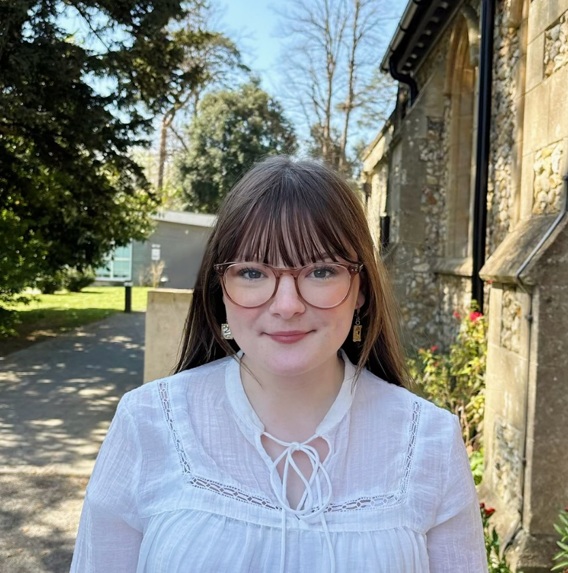
Poppy Dilks
PhD Student
About
After working in the Paediatric Psychology Service with a Clinical Psychologist during the peak of the Covid-19 pandemic, I decided to study Psychology at the University of Chichester. Throughout my journey, I struggled with being diagnosed with a long-term condition while working on my studies. Even with my experience of ‘behind the scenes’ processes of the NHS, it still took nearly 4 years, 3 MRIs, 2 nuclear scans and an incorrect diagnosis before I finally got the right results and put on a helpful treatment plan. This experience, as well as my professional time in the NHS, encouraged me to study long-term conditions, particularly the way that people with long-term conditions experience healthcare in the UK.
My undergraduate research into the effects of illness experience and healthcare experience on the ability to live well with long-term conditions was published in the Chronic Illness journal, while my master’s research into understand how people with long-term conditions perceive positive aspects of their healthcare won the BPS South East Branch Prize for Best Dissertation. My PhD research builds on both of these projects, developing a toolkit to be used in long-term condition outpatient healthcare services. I have been awarded an ESRC South Coast Doctoral Training Partnership (SCDTP) Research Studentship in Psychology for my PhD project which begins in October 2026.
PhD Title and Summary
Implementation and Integration of the Healthcare Experience and Long-Term Conditions (HEAL) Model and Toolkit
Nearly half of the people in England report having a long-term condition (LTC); many say they need more support to help them to cope. This project has three aims:
1) To understand the current facilitators and barriers of successful implementation of the Chronic Care Model (CCM) in outpatient LTC clinics. Knowing more about what helps and what can hinder these strategies will give us an understanding of the ‘what’. This will help us understand the ‘how’, which is our second aim.
2) To co-create the Healthcare Experience and Long-term conditions (HEAL) toolkit aimed at clinicians to support successful implementation of the CCM to improve healthcare experience for people with long-term conditions. By asking patients, clinicians who treat them, and informal carers that look after them, we can get a fully rounded picture of what everyone involved thinks. We know that 35% of people with LTCs feel unsupported, and that the way they experience healthcare impacts their life, showing how important it is to fully understand their experiences.
3) To assess the costs and effects of the HEAL toolkit compared to alternatives. The HEAL toolkit aims to combat four main issues that other interventional tools do not. By focusing on outpatient clinics, a wide variety of long-term conditions, and being collaborative and integrative to the electronic health record, the HEAL toolkit aims to be more effective in terms of time, cost, and resources.
Supervision Team
- Moitree Banerjee
- Isabelle Ball
- Karen Rodham
Publications
- Living well with long-term conditions: A quantitative investigation into the influences of illness and healthcare experiences https://pubmed.ncbi.nlm.nih.gov/41591946/
- The Preliminary Development of the Healthcare Experience and Long-Term Conditions (HEAL) Toolkit: A Mixed Methods Study
- BPS branch award publication (in press)