
 W600
W600 Overview
Develop your screen acting skills as you learn contemporary film production practices
This innovative and forward‑looking programme is designed for actors who want to thrive in today’s screen industries.
Expand your acting skillset
Blending traditional and contemporary acting training with film production, motion capture, action performance (including weaponry and screen combat) and professional voice work, the course prepares you for the realities of working across film, high‑end television and digital media.
Gain an in-depth insight into the world of film production
Central to the course is the philosophy of the actor as maker. You are encouraged to think beyond performance alone, gaining creative and technical insight into the wider production process.
Alongside acting training, you will develop skills as directors, screenwriters, editors, sound recordists and producers, enabling you to create, shape and deliver your own screen work with confidence and autonomy.
Develop the skills you need to thrive as a screen actor
Acting training exposes you to a range of techniques, with a strong emphasis on Meisner, supported by modules in audition technique, career preparation, voice, and performance for motion capture.
You also gain practical production experience in camera, sound, post-production and production management, with opportunities to explore specialisms in Directing and Screenwriting.
Collaboration sits at the heart of the programme
Through project-based learning, you will work alongside aspiring filmmakers and creative practitioners across the department, gaining a deep understanding of professional production practices, emerging technologies and collaborative workflows.
This approach develops a broad range of industry-relevant and transferable skills, essential for building sustainable careers across screen performance and creative production.
In addition to practical training, you will engage with the history, theory and cultural significance of screen-based media, allowing you to explore personal interests, strengthen critical thinking and position your creative practice within a broader cultural and industry context.
Together, this programme offers a comprehensive, industry-aligned screen acting education, empowering you to perform, create and collaborate confidently across today’s fast‑evolving screen industries.
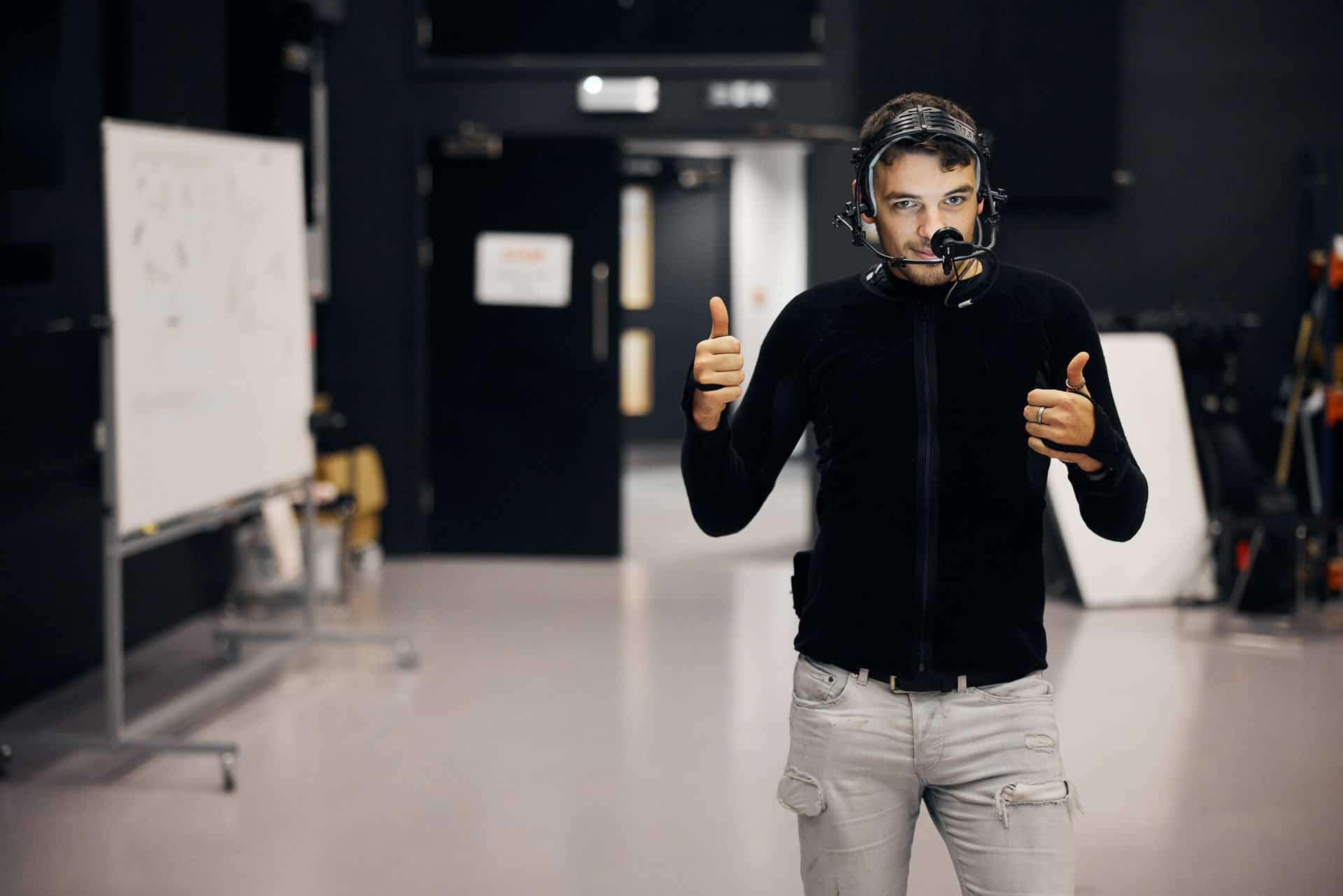
Study areas include:
- Motion capture
- Horse riding
- Action driving
- Climbing
- Weaponry and combat acting
- Screenwriting
- Audition practice
- Audio acting, voice over and ADR.
Learn from award-winning and experienced staff
You will feel the support of our team of highly-qualified professional practitioners and industry figures, including award-winning directors, producers, actors, writers, editors and composers from the fields of film, TV and games.
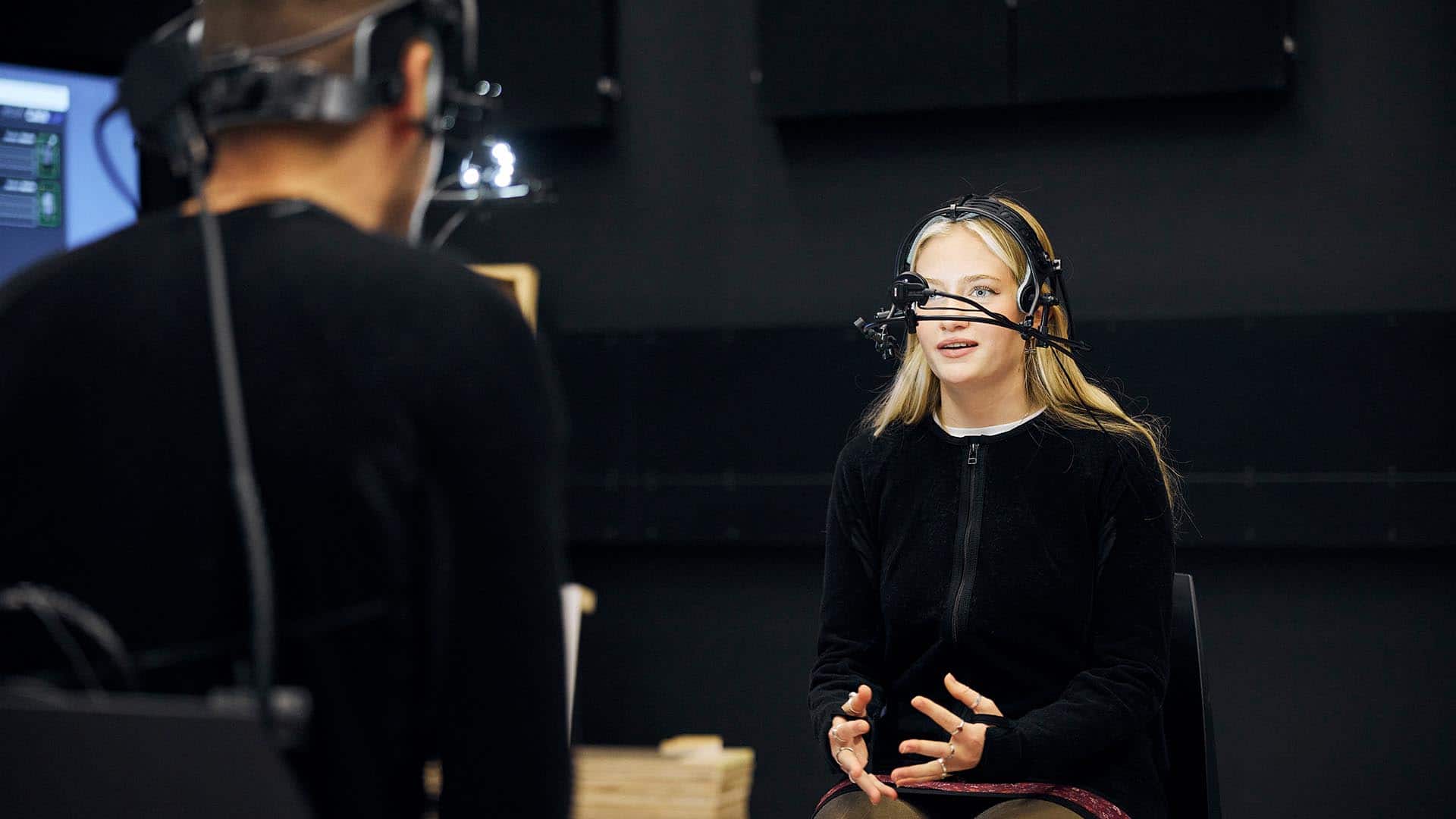
Explore topics including:
- Digital equipment operation
- Directing
- Cinematography
- Production management
- Freelancing and resilience
- The inner workings of the film industry.
Join our collaborative community
You will collaborate with dedicated craftspeople and makers from across the industry, to gain real world experience and work with aspiring filmmakers, writers and animators from across the Department of Creative Industries.
Feel prepared for your career
You will develop the creative and employability skills you need to thrive in your acting career with the help of industry-focused modules that explore the role of agents, auditions and freelancing.
The department runs regular field trips to international film festivals, professional film shoots and industry conventions, and you will be able to develop an early career profile on IMDB (Internet Movie Database) by working with professional associates and on staff projects.
On this course you will:
- Gain a comprehensive screen acting training, with options to expand your skillset as a performer.
- Explore a wide range of digital film production practices, techniques and technologies.
- Learn from award-winning and experienced staff from across the creative industries.
- Develop your employability and networking skills ahead of your career.
- Have opportunities to perform throughout your studies.
- Become part of a collaborative community and work with students from other courses.
Partnerships
As a part of the Department of Creative Industries you will benefit from our industry partnerships with companies including HyperX, DXRacer, Twitch, ARRI and AVID, and be able to access to industry standard software such as Nuke, Maya and Houdini.







The Course
Learn the craft of screen acting and digital filmmaking practices
Year One
In your first year, you will be introduced to the fundamental principles and techniques of film production and screen acting.
Year Two
In your second year, you will undertake a suite of specialist projects to support the development of discipline-specific technical, creative, and analytical skills.
You will also build on the skills you learnt in your first year, while learning how TV series are developed and the practice of contemporary motion capture production.
Year Three
In your third year, you will work towards your final project, which allows you to work across a range of areas to demonstrate your acquired performance and/or technical knowledge through the production of a creative portfolio.
You will also explore more advanced elements of action performance techniques and develop your employability options with modules in freelancing and building your own online portfolio of creative work.
Sustainability and Professional Practice: BAFTA Albert Scheme
The course aligns with BAFTA’s Albert Scheme, the leading sustainability framework for film, television, animation, and VFX industries. Albert provides industry-recognised tools and training to measure and reduce environmental impact across the full production lifecycle.
Students learn environmentally responsible production practices, including efficient resource use, energy awareness, and sustainable studio workflows.
Sustainability is integrated into industry-standard pipelines and professional decision-making, reflecting current studio expectations and roles.
Graduates are prepared to meet employer, broadcaster, and funder requirements, where Albert certification is increasingly a benchmark for responsible screen production.
Equality, Diversity and Inclusion
This programme embeds sustainability and Equality, Diversity and Inclusion (EDI) as core threads of its design, delivery and assessment, rather than as bolt-on themes.
Learning activities, case studies, set texts, guest contributors and assessment briefs are selected to reflect a diversity of voices, identities and lived experiences, and to interrogate the social, environmental and ethical implications of practice in the discipline.
Inclusive pedagogy – accessible materials, varied modes of participation, and assessment choice where appropriate – is applied throughout, and students are expected to engage critically with questions of representation, equity and power as part of their professional formation.
Modules
This list is indicative and subject to change.
- AI Creative Practice
- Introduction to Film Production
- Introduction to Screen Acting
- Film Practice
- Writing the Short Film
- Screen Acting Techniques
AI Creative Practice
This module introduces you to the use of Artificial Intelligence (AI) within contemporary creative practice. It is designed to develop awareness, confidence, and a basic critical understanding of how AI is used across creative disciplines.
You will be introduced to the ways AI intersects with areas such as writing, media production, performance, audio, and visual design. Early teaching provides an accessible overview of key ideas including authorship, originality, bias, and ethical considerations.
Following this, you will undertake an individual exploration into the use of AI within a chosen creative context or area of practice. This exploration may involve practical experimentation, comparison of outputs, or a combination of both.
The emphasis of the module is on exploration rather than technical mastery. You will be encouraged to try out AI tools, observe their effects, and begin to recognise your own judgement in relation to the outputs you produce.
Introduction to Film Production
This module aims to engage you with the fundamental practices and underpinning principles of camera operation, sound capture, and lighting for screen‑based production.
Through a combination of practical workshops and guided exercises, you will develop an understanding of how technical and creative choices impact visual and audio outcomes.
The module focuses on building core technical confidence, encouraging you to apply industry‑informed techniques in a range of controlled production scenarios. By the end of the module, you will be able to practically demonstrate essential skills in camera, sound, and lighting at a competent and proficient level, forming a foundation for more advanced production work and collaborative practice.
Introduction to Screen Acting
This module of study will be focused towards developing the sense of ‘company’ and on developing effective independent practice and study.
Movement work, vocal work, concentration and trust games will help to develop an open and creative work environment, enabling the trainee actor to engage with specific acting methods.
Exploring acting practices, methods and texts, you will begin to understand the potential of your emotional range, imagination, and creativity.
Towards the second half of the semester, you will be introduced to working with cameras and the basic acting techniques needed for screen acting.
Film Practice
This module provides foundational training in video production, introducing key technical and procedural skills across contemporary digital film practice.
Working in groups, you develop core competencies in the five principal areas of production: camera, sound, lighting, editing, and delivery.
Through practical work, the module explores processes spanning pre-production, production, and post-production, while promoting safe working practices. It also fosters transferable skills in teamwork, planning, and time management, supporting the development of foundational professional craft skills.
Writing the Short Film
This module introduces you to the craft of writing for short film, focusing on how ideas are translated into concise, visually driven screen narratives.
The short film is explored as a distinct storytelling form with its own conventions, including economy of storytelling, clarity of premise, and effective audience engagement. You will be encouraged to think in terms of action, behaviour, and visual storytelling, rather than description or exposition.
The module is designed for students from a range of creative disciplines, including screenwriting, film production, performance, and media. It provides accessible entry points for those with little or no prior writing experience, while also enabling more experienced writers to develop and refine their practice.
You will develop two original short screenplay projects, allowing you to explore different narrative approaches and apply core storytelling principles across multiple ideas.
Screen Acting Techniques
This module’s programme of study builds on Introduction to Screen Acting and reflective journal work. Acting methodologies and techniques will be used to explore and develop more in-depth scene work, more advanced on-camera techniques, and more sophisticated acting choices.
Experimentation and independent research will be encouraged with a deepening exploration of acting practices, methods and texts.
During this module you will continue to develop your emotional range, imagination, and creativity.
- Projects
- Screen Acting Techniques – Meisner
- Motion and Performance Capture
- TV Series Development and Pitch Optional
- Directing Optional
- Action Performance Optional
- Writing the TV Script Optional
Projects
The module provides a structured framework within which you will undertake a suite of specialist projects appropriate to your degree programme, developing independent working practices.
You will be expected to respond to multiple project briefs (typically 2-4) across two semesters, managing time, resources, and creative or research-based workflows.
The projects support the development of discipline-specific technical, creative, and analytical skills to a standard appropriate for progression to major projects and career preparation. Most projects will require team/group work and collaboration, sometimes between degree pathways, reflecting industry practice wherever possible.
You should engage with non-practical forms of inquiry (e.g., essays, reports, case studies, critical analyses) alongside practical production, fostering critical reflection and research literacy.
The module prepares you to evaluate your own work against professional, academic, or audience-facing criteria, articulating strengths, weaknesses, and lessons for future practice. This will in most cases involve team/group work on the projects themselves, and working to fixed delivery deadlines across both semesters.
Alongside the project(s) outcomes, be that written or practical, students document and critically reflect upon their research, creative influences, production processes, and final outcomes through a structured individual portfolio.
All productions/projects should be analysed using the BFI Albert Sustainable Production Framework.
Screen Acting Techniques – Meisner
The aim of this second-year module is to further develop screen acting skills with a specific focus on the Meisner Technique and its application to scripts and scene work.
Further exploration of the technique will be used to develop spontaneity, connection, and emotional confidence.
Integration of methodologies and communication between creatives will make up the later part of the module, developing your ability to sustain and evolve character across multiple scenes.
Experimentation and independent research will be encouraged with a deepening exploration of acting practices, methods and texts. You will continue to develop your emotional range, imagination, and creativity.
Motion and Performance Capture
This module introduces you to the principles and practices of contemporary motion capture production.
You will develop knowledge and practical understanding of motion capture workflows, including studio protocols, capture methodologies, performer requirements, and the translation of recorded movement into digital outcomes.
Through workshops and project work, you will engage with the collaborative and interdisciplinary nature of motion capture production, contributing through technical, creative and performance-based roles as appropriate to the brief.
The module enables you to develop professional skills in planning, problem-solving, communication and the realisation of motion capture outcomes within a production context.
TV Series Development and Pitch
OptionalThis module introduces you to the development of original television series, focusing on the creation, shaping, and communication of ideas for long-form screen storytelling.
You will work collaboratively to develop a series concept, exploring character, world, and narrative structure across multiple episodes. The module emphasises development as an iterative creative process, requiring you to generate, test, and refine ideas in response to feedback and constraints.
Alongside this, you will develop the ability to articulate and position your ideas, considering audience, genre, and industry context.
The module is suitable for students from a range of creative disciplines, including screenwriting, performance, and production, supporting collaborative approaches to storytelling.
Directing
OptionalThe module will provide you with the opportunity to explore the craft of directing actors. Focusing on the relationship and communication established between director and actor, you will be expected to engage with analysis and practice throughout.
The module will consider the different styles and approaches used in the forms of cinema and television drama, and you will be encouraged to apply this to your own work.
Action Performance
OptionalThis module will enhance professional practice by providing you with a range of specialist industry training in unarmed combat, sword fighting and firearms.
You will gain an assortment of practical skills and knowledge, essential for pursuing careers as professional action performers or as actors wishing to deliver safe and convincing on-screen performances.
Writing the TV Script
OptionalThis module focuses on the development and writing of a complete television episode, enabling you to apply your understanding of character, structure, and series design within a sustained piece of screenwriting.
You will develop an original pilot episode for a television series, addressing both the demands of a contained narrative and the requirements of an ongoing series. The module emphasises narrative progression, character-driven storytelling, and the craft of writing for television.
The module introduces and develops key principles of character, structure, and series design, enabling you to shape an original idea into a structured television screenplay.
Prioritising drafting and redrafting, it will encourage you to refine your work through feedback and iterative development.
- Dissertation
- Audition Technique
- Career Prep for Actors
- Audio Story Optional
- Facial Performance Capture Optional
Dissertation
You will undertake a substantial, self-directed project (group or individual) that represents the culmination of your undergraduate study.
It will require you to synthesise, where applicable, technical skills, theoretical knowledge, creative vision, and professional practices to produce a substantial piece of original work (group or individual) accompanied by an individual portfolio exploring research methodologies and underpinned by critical reflection.
The dissertation is defined not by a single format, but by its significance, ambition, and rigour. You will propose and execute a project that aligns with your discipline while demonstrating an understanding of its context within the broader screen arts landscape. Unlike traditional written dissertations, this module accepts diverse outputs—from films and screenplays to audio dramas, sports documentaries, essays, media campaign analyses, or technical portfolios—as long as they are underpinned by systematic research and critical reflection.
All productions/projects should be analysed using the BFI Albert Sustainable Production Framework.
Audition Technique
This module introduces you to the essential skills and comprehension required to effectively compete within the entertainment marketplace.
Intensive practical exploration will equip you with casting practices, common audition scenarios, audition techniques, technical skills, and working under pressure.
Career Prep for Actors
This module hopes to engage you directly with a wide range of industry practitioners. You will have the chance to research the invited guests in anticipation for live Q&A’s about entering the industry or other related careers.
Audio Story
OptionalThis module explores storytelling through sound within a collaborative production environment, requiring students to develop and realise an original audio drama.
You will work across disciplines to conceive, write, perform, and produce a fully realised audio narrative. The module focuses on how character, narrative, and meaning are communicated without visual elements, emphasising dialogue, pacing, and the expressive use of sound.
Narrative development remains central to the process, evolving through rehearsal, sound exploration and, where appropriate, performance.
You will engage in an iterative development process in which scripts are tested, refined, and realised through production, reflecting industry practices in audio storytelling.
Facial Performance Capture
OptionalThis module develops your knowledge and practical understanding of contemporary facial performance capture production.
You will engage with the principles, workflows and creative applications of facial motion capture, including performer preparation, head-mounted camera systems, facial tracking technologies, capture methodologies, retargeting processes, and the translation of recorded facial performance onto digital facial rigs.
Through workshops and project work, you will explore the relationship between performance, technical setup and postproduction practice, including the integration of facial capture with wider body-based motion capture workflows. The module enables you to develop professional skills in planning, problem-solving, communication and the realisation of facial performance capture outcomes within a collaborative production context.
Teaching and Assessment
Feel the support of our expert and experienced staff
Teaching
You will be taught by a range of experts in screen acting and digital film production including professional filmmakers and experienced practitioners, with extensive and successful careers in the industry.
You will build your subject knowledge and practical experience through small seminars, lectures, workshops, practical classes and tutorials, which help encourage theoretical and critical debate and develop your practical skills.
Smaller class sizes to help your development
Our commitment to smaller class sizes allows you to feel more confident to discuss your ideas in a supportive environment and allows your tutors get to know you and how best to aid your development.
Assessment
You will be assessed through a range of creative and practical assignments including:
- Short films
- Audio tracks and podcasts
- Video essays
- Creative portfolios
- Presentations
- Reflective writing.
Experience
Discover industry standard software and equipment
A Film School Built for the Real World
The University of Chichester’s Film School facilities at the Tech Park, Bognor Regis campus place students inside a professional film and screen production environment from day one.
Designed to reflect contemporary industry practice, the Tech Park enables students to develop creative, technical and collaborative skills using the same spaces and workflows found in professional film, television and broadcast production.
Industry-standard film and TV production spaces
At the heart of the Film School offer is access to facilities that support the entire screen production pipeline, from development and shooting through to post-production and exhibition:
- A 250-square-metre, three-storey sound stage, one of only a handful in the UK capable of accommodating large-scale productions and even a professional orchestra
- A dedicated green screen and motion capture studio, supporting visual effects, virtual production and contemporary screen storytelling
- Professional TV and film production studios, complete with green room facilities, enabling students to work in broadcast-ready environments
These spaces allow students to work on ambitious projects at scale, preparing them for the realities of professional production settings.
Professional post-production and screening facilities
Students complete their work using industry-aligned post-production facilities that mirror professional editorial houses:
- Nine dedicated edit suites, including a Soho-standard dubbing and mastering suite
- A screening theatre, designed for group critiques, narrative analysis, assessment screenings and public showcases
From rushes to final delivery, students keep their projects in-house, building confidence, autonomy and professional fluency.
Audio, sound and scoring for screen
Sound is treated as a core creative discipline within the Film School experience:
- Professional recording studios and live rooms, supporting dialogue recording, sound design, Foley and scoring
- Access to industry-standard audio software and control rooms used across film, TV and media production
This enables students to understand sound as a storytelling tool, not simply a technical add-on.
Learn with industry tools – not simulations
Film School students work in dedicated Mac and PC production suites, fully equipped with the software used across the screen industries, including professional editing, colour grading, sound and post-production platforms.
Teaching spaces are designed for hands-on learning, collaboration and critique, reflecting real-world creative workflows rather than classroom-only delivery.
A Film School connected to industry
The Tech Park is deliberately conceived as a shared educational and professional environment:
- Facilities are used for live briefs, visiting professionals, client projects and external productions
- Courses are shaped around industry expectations, ensuring graduates leave with strong portfolios, production experience and confidence working in professional settings
Students don’t just study film – they operate as filmmakers, supported by staff with industry backgrounds and facilities that encourage ambition.
Bognor Regis campus
Our Bognor Regis campus boasts our £35m Tech Park, beautiful Georgian architecture and is within walking distance of the sea.
£35 million Tech Park
Our flagship Tech Park offers you access to world-class, industry-standard facilities.
Expert staff
Our industry-experienced staff get to know you and your learning needs to help you thrive.
Film and Green Screen Studios
Our specialist film and green screen studios allow you to develop professional level productions on campus.
Post-production facilities and recording studios
Discover our range of facilities for audio and visual media post-production.
Motion capture
Our dedicated motion capture equipment allows you to bring your visions to life on the big screen.
Learning Resource Centre
The Learning Resource Centre (LRC) contains the library, a café, IT/teaching rooms and the Support and Information Zone (SIZ).
Library
Our campus library holds more than 200,000 books and over 500,000 eBooks.
Study Abroad
Explore the opportunity to study part of your course abroad
As a student at the University of Chichester, you can explore opportunities to study abroad during your studies to enrich your educational experience.
It’s a chance to broaden your horizons, a great opportunity to meet new people, undertake further travelling and to immerse yourself within a new culture.
You will be fully supported throughout the process to help find the right destination and institution for you and your course. We can take you through everything that you will need to consider, from visas to financial support, to ensure you get the best out of your time studying abroad.
Careers
Prepare for a wide range of careers
This BA (Hons) Screen Acting and Film Production degree will prepare you for a range of careers, as you graduate ready to have an impact on the workplace.
This course could lead to a career in:
- Television and film
- Games
- Animation
- Radio
- Advertising
- Screenwriting
- Producing
- Directing
- Teaching.
Further Study
You could choose to continue your studies at postgraduate level.
Study options at the University of Chichester include:
- PGCE
- PhD/MPhil.
University of Chichester alumni who have completed a full undergraduate degree at the University will receive a 15% discount on their postgraduate fees.
Course Costs
Course Fees 2027/28
UK fee
£10,050
International fee
£17,354
EU/EEA Fee Reduction Scholarship
EU/EEA students automatically pay the equivalent of UK fees via the EU/EEA Fee Reduction Scholarship
For further details about fees, please see our Tuition Fee page.
For further details about international scholarships, please see our Scholarships page.
To find out about any additional costs on this course, please see our Additional Costs page.
Entry Requirements
Typical offers (individual offers may vary):
UCAS
104
tariff points from A levels or combination with Extended Project / BTEC / Cambridge Technical.
A Levels
BCC
BTEC
DMM
Access to HE Diploma
Pass
IB
28 points
IELTS
6.0
with no element lower than 5.5.
Auditions
You will need to demonstrate your ability in acting in a performance audition. If you are applying for a Music or Musical Theatre joint course you will also need to demonstrate your ability in dance and/or singing.
Contextual offers
We believe everyone deserves an equal opportunity to pursue higher education, regardless of their background.
When we receive your application we consider your personal circumstances and the factors surrounding your achievements to see if you are eligible for a contextual offer. This is an offer with a reduced entry tariff – typically the equivalent of 16 fewer UCAS points (two A-level grades).
Applicants who are predicted to achieve two or more (A-level) grades better than the published typical offer will normally be made the typical offer, rather than a reduced offer. For example, where the predicted grades are BBB, and the published typical offer is BCC, a BCC offer would be made.
Find out more about our contextual offers.
Interviews and Auditions
Auditions and interviews usually run from January until March/April.
We aim to offer you a genuine dialogue during your application process. This gives you a sense of worth and achievement from the audition process itself; a sense of ownership for you during the process and, ultimately, is an opportunity for us to get a clear understanding of who you are, what you need and how we can best prepare you for your degree.
We judge you on your skills, your potential, and your personality, not your background.
If you are invited to audition you will receive an email asking you to book your audition date on ChiView. If you are unsuccessful we will email you to let you know.
You can usually choose between multiple days on ChiView at one time. If none of the current dates suit you please contact admissions@chi.ac.uk.
Once you have booked your audition, you will be able to access the audition guidance document on ChiView – just log into the ChiView portal, click on ‘Events schedule’ and then ‘View details’ to access the document, which will tell you how to prepare for your audition, what to expect on the day, etc.
If your situation changes and you can no longer attend your audition date, you should cancel your booking in ChiView by visiting your ‘Event Schedule’ and clicking ‘Cancel Attendance’. You also need to inform the admissions team by emailing admissions@chi.ac.uk, so we can send you a new audition invitation.
Sometimes if you are viewing your ChiView portal on a phone you will not be able to see the page correctly. If this happens you should try again on another device.
You may need to clear your browser history.
If you are still unable to see the ‘View details’ button, please check that you have successfully booked your audition by clicking ‘respond to interview invitation’.
If all else fails please email admissions@chi.ac.uk with your query and applicant number.
Once you have booked your audition, please log into the ChiView portal, click on ‘Events schedule’ and then ‘View details’ to access the audition guidance document, which will tell you (amongst other things) what will happen at the audition itself, a basic itinerary of the whole day, parking information, etc.
In brief, there should be an introductory talk by the department, the chance to meet lecturers and other applicants, as well as your opportunity to perform for the audition panel.
After your audition, the panel will discuss your performance and pass our decision onto the admissions team, who will update UCAS and email you with the outcome, whatever it might be.
- We may offer you a different course: We may offer you a place on an alternative, relevant course within the department, rather than offer you the course you applied for. If this is the case, we will state this in your offer letter/email and update your course on UCAS. We will explain our reasoning, which will revolve around placing you on the most appropriate course where we think you will thrive.