
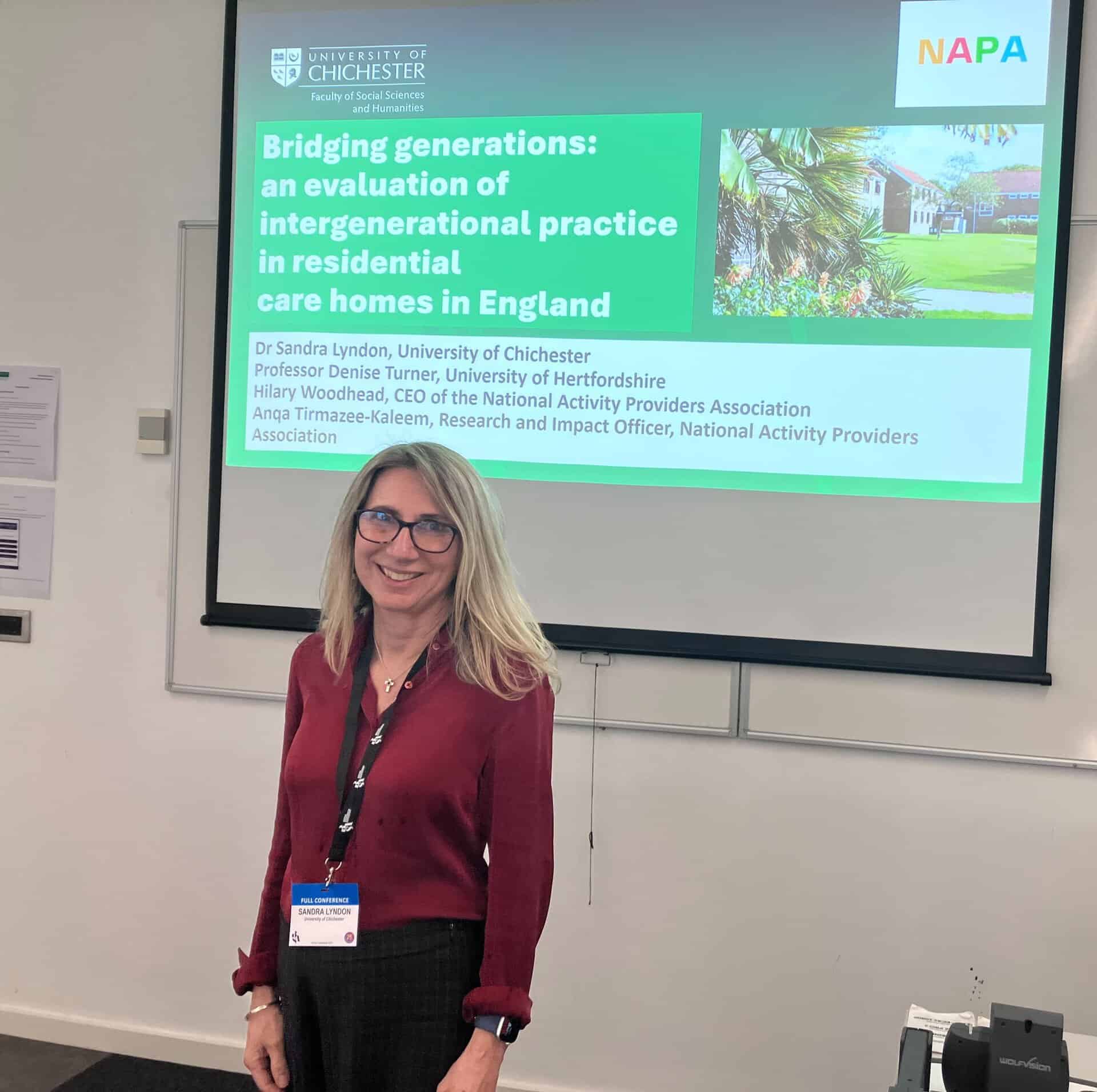
Intergenerational activities in residential care homes deliver significant benefits for older residents, children and care staff, according to new research by the University of Chichester.
Shared activities and interactions with children and young people can meaningfully reduce loneliness and isolation among care home residents, with 80% of care home staff citing this as a major benefit of their work. The activities also saw improvements in children’s confidence, empathy, social skills and attitudes towards aging, the research found.
But more training and resources are needed to maximise the benefits, with the survey finding that 73% of care homes had received no formal training in intergenerational practice.
The study, by Dr Sandra Lyndon at the University of Chichester, in collaboration with Professor Denise Turner, University of Hertfordshire, Hilary Woodhead, National Activity Providers Association (NAPA) and Anqa Tirmazee-Kaleem (NAPA), surveyed 65 care homes across England to explore the benefits, challenges and experiences of intergenerational practice (IG).
The researchers are calling for intergenerational practice to be formally embedded within care home standards, backed by accessible training and stronger partnerships with schools and community organisations.
Dr Sandra Lyndon, Reader in Childhood and Social Policy, presented the research at British Sociological Association Conference at the University of Manchester (8-10 April), and said: “The conference was an excellent opportunity to share our initial findings of the project. One of the themes of the conference was the importance of connection throughout the life course particularly in older age, which aligns well with the findings from our own research.”