
 W800
Overview
Develop your skills as a writer and critic to shape our cultural future
Our BA (Hons) Creative Writing and English course offers a focused experience that introduces you to a diversity of creative and critical experiences of literature.
Over your time on the course, you will become a confident, creative writer and literary critic with a deep knowledge of English Literature.
You’ll learn from our team of successful practising and published writers, all of whom have extensive experience of the industry.
You’ll also work with our experienced English Literature team, who are all active researchers and writers. They will help you engage with the latest critical debates about literature and understand the past development of literature and creative writing.
On this course you will:
- Experience the diversity of creative and critical writing across a range of forms and genres
- Develop your critical understanding of literature from the whole range of English Literature
- Work with an experienced and engaged team of writers, critics, and thinkers
- Understand the importance of literature and writing in understanding the most important debates about our past, present, and future
- Enjoy a focused and well-structured degree that allows you to grow as a writer and critic
- Gain industry contacts at our annual publishing panel
The Course
Define your degree path by your creative and critical interests
The course provides a structured introduction to the most important skills you need as a creative writer and literary critic
Our BA (Hons) Creative Writing and English course builds your confidence as a writer and critic by helping you to understand the diversity of English Literature.
We offer modules that provide you with core understandings of how to write creatively and how to think critically about literature and culture.
Year One
In your first year, you will learn how to express your own creative and critical voice through a series of introductory courses that guide you through the essentials of literary study.
Year Two
In your second year, you will deepen your understanding of creative writing and literary studies through experiencing a diverse range of creative and critical approaches to literature.
Year Three
In your third year, you will design your own dissertation project with our help and select whether you want to focus on creative writing or English literature.
Also, third-year modules draw on the experience of the teaching team to engage you in the latest debates in the field.
Modules
This list is indicative and subject to change.
- Introduction to Creative Writing
- Subverting the Subject: Ideas in Literature from Barthes to Gaming
- Literature Now: Reading and Writing Modern and Contemporary Literature
- Conflicts and Controversies in Victorian Literature: Charlotte Brontë to Charles Dickens
- Creative Non-Fiction: Starting From The Self
- Writing Back: Poetry, Image Voice
Introduction to Creative Writing
Introduction to Creative Writing provides a foundation for your degree in Creative Writing, with a focus on imagination, creative and critical thinking, and the transformative power of language.
You will be introduced to the fundamental skills of creative writing through two core lines of investigation: the Writer’s Notebook and the creation of characters.
You will develop your writer’s notebook through active engagement with a wide range of sources, including personal experience and the local environment, and recording lived experience through attentive use of the senses.
Subverting the Subject: Ideas in Literature from Barthes to Gaming
This module explores the idea of the subversion of the subject, our idea of the individual, across a range of ways of thinking about literature.
If fiction is already an exploration of the subject, and one that is potentially destabilising, then we need to consider how our selves might be considered as a kind of fiction and what results from this.
Ranging from the 1970s to the present, we will examine how ideas of the unconscious, of the body, of the libido, of power, of simulation, of performance, and of the machine and the animal undermine our sense of the boundaries of the human and even the human itself.
Literature Now: Reading and Writing Modern and Contemporary Literature
How do we write and read our own moment? Exploring modern and recent literary texts and transformations of the literary (film, graphic novels, digital texts, gamification, etc.), this module introduces you to the contemporary cultural landscape.
Tracing multiple forms of writing and reading, you will gain the capacity to engage creatively with the present and to develop your own critical responses.
Flexible and expansive, this module allows you to test cultural forms, create your own written responses, and grasp your own experience of the present.
Conflicts and Controversies in Victorian Literature: Charlotte Brontë to Charles Dickens
This module will familiarise you with a series of key texts from the early and mid-Victorian period, covering the 1830s through to the 1860s.
You will focus on some of the major conflicts and controversies associated with this time of significant change, and will consider the different ways in which a range of writers responded to these concerns.
The module will develop your skills in the application of contextual and historical knowledge to the structure and content of a range of texts, including novels, poetry and one scientific text.
The module will also help you develop the skills of close textual analysis, which you will rely on throughout your degree.
Creative Non-Fiction: Starting From The Self
This module is an introduction to the versatile genre of creative non-fiction, in which writers employ skills transported from fiction to lend dramatic complexity to factual narratives. Using autobiographical material as a base, and developing narrative skills acquired across CW teaching, you will generate dramatic scenes on a variety of topics and themes.
The ethics of life writing will be a prime focus throughout, and workshops will provide you with the opportunity to provide not only constructive feedback on work-in-progress, but sensitive responses to the life experiences of your peers.
Workshop and writing protocols around dealing with ‘life writing’ materials will be developed, as well as engagement with theoretical underpinning from autobiography, memoir and life narratives scholarship. The module encourages creative thinking and innovative exploration.
This module forms the basis of a creative non-fiction ‘strand’ which you will develop through Level 5 and Level 6, and includes the development of real-world skills aimed at leading towards access to creative writing, publishing and associated industries.
Writing Back: Poetry, Image Voice
This module aims to provide you with knowledge of how poetic genres have arisen and developed through time and the ability to engage with that poetry, imaginatively and critically.
This module begins with a discussion of originality and tradition in English poetry. It will then follow with a series of weekly studies of particular poetic forms, focusing on examples old and new. You will study songs, elegies, ballads and Lyrics from the Middle English era to modern variants and kinds.
You will encounter a variety of forms and voices in contemporary, experimental and traditional poetry. The focus will be on finding and recognising source material and imaginative territories, and on writing back, experimenting with voices, tones, imagery and sound.
- American Visions: Modern and Contemporary American Writing
- Romantics, Rebels and Reactionaries
- Experiments in Fiction: Detection, Sci Fi, Magical Realism and Beyond
- Reenchanting ‘the West’: Learning from Myth & Sacred Texts
- Creative Non-Fiction: Writing Lives
- Fairy Tales: From Early Modern to Postmodern Optional
- Fiction: Stories in Motion Optional
- Work Placement Optional
American Visions: Modern and Contemporary American Writing
You’ll be introduced to the depth and range of modern and contemporary American literature, defined as American writing during the 20th and 21st centuries.
The course will engage with key texts and writers and will be diverse and inclusive of a range of voices. It will also engage with a range of forms, including the novel, short stories, poetry, and creative non-fiction.
Romantics, Rebels and Reactionaries
After gaining knowledge of the earlier eighteenth century, you will study the Romantic period. This was a time of revolution: when the idea of ‘rights’ first emerged; when the ‘noble savage’ was imagined; when childhood was invented; and when an actress made love to a prince and wrote about women’s rights.
This module follows a chronological pattern but will teach the debates stimulated by the American and French Revolutions. It will examine their impact on the vibrant literature and ground-breaking thought of the time.
As well as covering the great works of the major Romantic poets, this module will examine the exciting genres and writers that have risen to prominence within the Romantic period relatively recently.
Experiments in Fiction: Detection, Sci Fi, Magical Realism and Beyond
From historical fiction to science fiction, realism to romance, gothic to detective fiction, this essay assessed module explores the way writers exploit genre to entertain, persuade or amaze.
You will discover some of the principal genres in prose fiction from the rise of the novel to the present day. You will trace the rise of genres in literary history, defining characteristic features of different kinds of prose text, which you will then be able to apply to your own writing and analytic work.
Genres are often passed over or ignored in certain kinds of modern literary criticism: this module explores why, and argues for the importance of often underrated generic forms.
You will learn to recognise key aspects of specific genres, and variations upon these elements, as well as to examine the historical conditions that give rise to particular genres and make them salient at particular moments.
Reenchanting ‘the West’: Learning from Myth & Sacred Texts
In this bivalent Creative Writing and English module, you will examine the genesis, evolution and global context of Western literature through an internationalist and Beyond Realist lens.
You will read European and world myths, folklore, legends, wonder tales and sacred texts and discuss in relation to global, historical and contemporary Beyond Realist and social realist oral literature and texts. You will be asked to consider questions concerning hidden social histories (disability, queer identities, gender, class and race); political power; psychology; mythography; poetics; narrative structure; cultural appropriation; and translation.
Ultimately, the module will empower you to confidently participate in creative and critical conversations and writing modes that: reveal and challenge unconscious fears of women and the racialised ‘other’; re-enchant our relationship with the natural world; and reclaim the power of traditional global majority storytelling.
Lectures will introduce you to ‘the Cauldron of Story’: core texts and oral literature in the fields of world myth, legend, folklore and wonder tale. Topics and texts covered will include:
- The Descent of Inanna: The Underworld, Gender & Power in Ancient Sumerian, Egyptian and Greek myth
- The Odyssey: Family and the ‘Monstrous Other’ in Ancient Greek myth
- LGBTI+ Identities in World Myth and Religious Traditions
- Joseph/Yosef/Yusuf and David: Dreamers, Autists and Singers in the Abrahamic Tradition
- The Trickster in Norse, West African, Chinese and Native American myths and animal fables
- Myth, Legend and Science: Invention and Discovery in the Nart Sagas and Native American folklore
- Witches & Warriors in Celtic mythology
- 1001 Nights: The Power of Storytelling
In seminars, you will be invited to read these stories in relation to contemporary texts in English and English translation: work ‘speaking back’ to traditional narratives, including poetry and fiction by Margaret Atwood, C.P Cavafy, Adrienne Rich, Sylvia Plath, Ocean Vuong, Derek Owusu, Kayleb Rae Candrilli, Naomi Shihab Nye, Joanne Limberg, Derek Walcott and Zhraa Alhabobi.
Uniting these disparate fields of study will be a critical concern with themes of gender, power, disability, war, the supernatural, faith, and the beyond-human world. Jung’s theory of the archetype and Campbell’s ‘The Hero’s Journey’ will be introduced as conceptual frameworks subject to feminist, queer, post-structural and decolonial critique, including by Valerie Frankel, Hélène Cixous, Edward Said and Dr Eldon Yellowhorn.
You will critically evaluate mythic archetypes and stereotypes, including the Warrior Woman, the Hero, the Good Wife, the Monster, the Transgender and/or Blind Prophet, the Trickster and the Witch. Questions of universality will be contextualised in relation to specific historical contexts, including our own diverse backgrounds and shared cultural experiences.
Creative Non-Fiction: Writing Lives
Focusing on life narratives and creative non-fiction, including biography and autobiography, this module will develop your skills in the genre of creative non-fiction. Developing narrative and research skills acquired in previous prose modules, you will write an account of a transformative event in a person’s life.
You will develop journalistic and digital communication skills which underpin the history of creative non-fiction (eg. New Journalism and Ethics of Life Writing). The concept of the ‘personal essay thesis’ will be explored.
You will be encouraged to articulate ‘the big idea’ or ‘the question at stake’ in your work. In doing so, you will be encouraged to connect your creative non-fiction to relevant debates in contemporary culture, and to engage with the issues arising from these debates.
Understanding the creative potential of different forms (such as the underlying structures of narrative, poetics and storytelling) will equip you with the ability to recognise, experiment with and transform a wide range of crafts, practices and modes of expression.
The ethics of life writing will remain a primary focus. You will explore potential personal and professional consequences of publishing life writing, and workshops will provide you with the opportunity to provide sensitive responses to the life experiences of your peers.
This module continues the degree’s creative non-fiction ‘strand’ and leads towards ‘Digital Writing’ in Year 3.
Fairy Tales: From Early Modern to Postmodern
OptionalThis module is designed to enable you to develop an informed historical, critical, and imaginative perspective on the fairy tale.
Tracing this powerful literary and cultural tradition from its written roots in early modern Italy, through the Salon culture of 18th-century France, the 19th-century folklore and fairy tale collections of Germany, Norway, Russia and Ireland produced against the backdrop of great social and political change and emerging nationhood, and the collections of Lang and Jacobs – part of the great codification exercises undertaken in late 19th-century British intellectual culture – in this module, you will examine the development of the fairy tale over the course of three centuries.
Through critical analysis of the work of figures including Straparola, Basile, Perrault, d’Aulnoy, the Grimms, Hans Andersen and W.B Yeats, and the original fairy tales (as opposed to reworking or recording tales from an oral tradition) of George MacDonald and Oscar Wilde, this module will discuss changes and developments within the genre through analysis of a wide range of stories, and through a specific focus on six major narratives (Puss in Boots, Bluebeard, Snow White, Sleeping Beauty, Cinderella, Red Riding Hood).
In the later weeks of the module, you will consider the work of a range of major 20th-century authors in order to consider and question the continuing influence of the traditional fairy tale. This includes examination of the use of fairy tale tropes and narratives in feminist texts by Angela Carter, Margaret Atwood and A.S. Byatt. The module also analyses the fairy and folk tale traditions of China and Japan.
You will develop a detailed knowledge of the development of the fairy tale and be able to position different collections and their authors within specific historical, political and cultural contexts. You will be able to analyse tales through specific theoretical approaches.
As a Creative Writing student, you will be able to produce your own fairy tales, inspired by or in opposition to models critically assessed during the course of the module.
Fiction: Stories in Motion
OptionalThis module explores the dynamics of change in contemporary fiction, with particular emphasis on how research initiates and propels narrative movement.
You will examine a range of texts across different modes of fiction – such as the fantastic, experimental writing, and folktales – to explore and evaluate how stories are set in motion through moments of disruption, discovery, or transformation.
Through close reading and discussion, you will analyse narrative form and the techniques writers use to shape stories, create tension, and generate conflict. These include structural choices as well as stylistic devices that control pacing, focus, and momentum.
You will develop your skills of effective storytelling through research and a range of writing devices, including exposition, dialogue, patterns of imagery, metaphor, and suggestion. Attention will be given to how these elements work together to animate a story’s central concerns and themes.
The module aims to deepen your understanding of short fictional narrative forms and to inspire the production of original creative work that demonstrates control over both the technical and imaginative aspects of these genres.
Alongside creative writing, you will write a critical essay on one of the model short stories studied. This essay will focus on a specific writing device explored during the module, analysing its function and effectiveness in relation to the story’s central theme or themes.
Work Placement
OptionalThe work placement module allows you to develop your skills in a work environment and gain vital experience to put you ahead in your future career.
During your placement, you could gain experience in, for example, a workplace such as a local newspaper or as a writer-in-residence.
You will then use the skills you have learnt on your course in order to reflect critically on the world.
- English and Creative Writing Dissertation
- Unconscious Desires: Psychoanalysis and Culture, From Freud to Žižek
- Gothic Women’s Writing
- Unforgettable Corpses: Literature, Cultural Memory and the First World War Optional
- Digital Writing: Writing for the Community of Strangers Optional
- Writing the Novel Optional
- Fantasy Writing: Origins and Development Optional
- European Literary Legacy: Writing the City Optional
English and Creative Writing Dissertation
The English Literature Dissertation enables you to build on the research and writing skills developed during the first two years of the degree. It gives you the opportunity to work independently on a research project of your own choosing (with supervision), to pursue specialist interests and to strengthen and enhance your knowledge of a chosen subject.
The Dissertation in Creative Writing gives you the opportunity to work independently on an imaginative writing project of your own choosing (with supervision), to pursue specialist literary-creative interests, and to strengthen and enhance your understanding of a chosen genre, literary form or area of artistic enquiry.
It will include a related essay in which you, as a writer, investigate a particular artistic, aesthetic or cultural issue of relevance to you as contemporary writers OR the work of a particular writer who will be influential as you develop your own body of work for the Dissertation project.
Unconscious Desires: Psychoanalysis and Culture, From Freud to Žižek
This course explores the notion of unconscious desire and the expression of these desires in literature and culture.
It traces the emergence of the ideas of unconscious desire in the work of Freud and how Freud links this idea to the literary and the cultural. Then the course explores the ways in which various psychoanalytic thinkers have transformed the notion of unconscious desire and used it to grasp literary and cultural forms.
At the heart of our experience is, psychoanalysis argued, a fundamental fantasy that engages and shapes our experience of the world and our ‘selves’. These fundamental fantasies are shaped by literature and culture.
Gothic Women’s Writing
The aim of this module is to examine a range of women’s Gothic and Romantic- period writing, including Mary Wollstonecraft, Ann Radcliffe and Jane Austen in the late eighteenth and nineteenth centuries. You will explore a range of prose texts across a variety of genres, including the novel, the essay and the drama.
You will discover how this writing, while often underrated, was of importance to Romanticism (previously often primarily understood and defined in terms of poetry written by men).
You will also examine the use of the Gothic and assess how this popular but often devalued mode of writing adds to our understanding of an extended Romantic period and to nineteenth-century literature.
You will explore the relationship between such writing and the political debates of the period. In particular, the module uses these writings to show the intensity of the debate concerning the nature of the individual and society in the political turmoil following the American and French Revolutions and their long-term aftermath.
By examining women’s writing, you will be encouraged to move away from naïve assumptions about the historical context, particularly in terms of sexual and political oppression.
You will consider how ‘feeling’ or sensibility, often connected with femininity, became a key concept. You will be encouraged to appreciate the complex interaction of the discourses of taste, gender and politics in the period and consider the role women writers played in this.
Unforgettable Corpses: Literature, Cultural Memory and the First World War
OptionalThis module will examine literary products of the First World War, the methods by which the authors reproduced, described and fictionalised their experiences.
The second half of the module will also consider the use of First World War tropes in literature produced in the latter half of the 20th century, compare the application of those narrative devices, and critically assess the later use of those devices.
Digital Writing: Writing for the Community of Strangers
OptionalOn this module, you will harness the skills developed in non-fiction modules at Levels 4 and 5 to engage with new possibilities in digital writing, including: blogs; gaming reviews; online journalism; social media campaigns; experimental digital writing; podcasts; fan fiction; etc.
You will develop your creative skills and augment them with the technical skills that are necessary to deliver a written project in a specific interest area. The content of the project should be appropriate to the chosen delivery platform or idea.
You will be required to submit a critical essay, exploring specific cultural and political issues that confront digital writers, e.g., ethical concerns; the role of AI in the digital landscape; questions of power and authority; privacy; writing as a nonlocal activity; writing as an inter-objective experience, etc.
You will be encouraged to explore experimental possibilities, and to extend the range of your work by engaging with groups both within and beyond the University.
The module will cover a trinity of skills: academic, technological, and professional, with an emphasis on employability and transferring storytelling and narrative building ideas into the job market.
Throughout, you will be encouraged to examine your chosen field critically and to engage with examples of the best professional practice.
Writing the Novel
Optional“Mine deeper. Strike through the mask!” The words of Herman Melville form the underlying note of this Level 3 module, which aims to build upon modules on prose learning in Years 1 and 2.
Having acquired skills in narrative, imagery, characterisation, and theme, you will now be encouraged to develop these skills in greater depth while engaging with the demands and challenges of a longer form. Using prescribed reading and independent research, you will be asked to develop the first chapter of a novel, as well as a concise synopsis of the remainder.
You will be encouraged to adopt a set of working methods and habits that assist lifelong learning so that the novel may be completed after university.
To this end, you will be asked to write a critical paper that demonstrates productive and creative engagement with a novel that has expanded the imaginative range of your creative practice.
Here, you will be asked to make critical insights that demonstrate understanding of relevant and appropriate literary traditions within your chosen field.
Together, the two modes of assessment are intended to deepen the reflective and creative techniques fostered in the two previous years of the course.
Fantasy Writing: Origins and Development
OptionalThis module explores the landscape of fantasy writing from its origins to the contemporary.
This module will guide you through this rich and living tradition from medieval origins to modern greats like Tolkien and C.S. Lewis.
By the end of the module, you will be equipped to respond critically or creatively to fantasy writing as a genre.
European Literary Legacy: Writing the City
OptionalThis module will deal with anxieties regarding the relationship between reader, author and cityscape.
Not only will it provide a survey of a variety of canonical and non-canonical works drawn from and inspired by a specific location, but it will provide you with a new set of theoretical constructs drawn from psychogeographic writers and texts.
Ranging from classic canonical texts to contemporary genre fiction, this course will provide you with an in-depth literary history of the period studied (that builds on previous modules), clear connections between the texts under discussion and a renewed attempt to place theoretical readings in context.
Using key psychogeographic works by Benjamin, de Certeau, Debord, Sinclair and others, the early part of the module will situate you in the theoretical context for the study of the works developed from the geographic space – in this case Venice.
The module will then go on to discuss key works created and inspired by Venice over the past four hundred years (roughly) and, by doing so, each work will build upon the other, creating a firm vision of the cityscape that has both transformed writers and has been transformed by literary and visual art over time.
Experience
Find facilities and research centres that support your learning
Bishop Otter campus
Click to watch our virtual tour of our historic Bishop Otter campus in the heart of Chichester.
Close community
Our commitment to a friendly and close-knit student community contributes to a high degree of success for our graduates.
Learning Resource Centre
The Learning Resource Centre (LRC) contains the library, a café, IT/teaching rooms and the Support and Information Zone (SIZ).
Library
Our campus library holds more than 200,000 books and over 500,000 eBooks.
Expert staff
You will learn from practising and published writers alongside expert academic tutors from the field of English Literature.
Subject-specific librarians
If you have difficulty finding material for an essay, seminar or project, subject librarians will be happy to provide assistance.
South Coast Creative Writing Hub
The University is home to this community of staff, graduates and current students who host events with local authors.
Chichester Centre for Fairy Tales, Fantasy and Speculative Fiction
Our forum for research and debate into beyond realist literature.
Guest speakers
The University regularly welcomes renowned creative writers to speak on their work and industry.
Iris Murdoch Research Centre
The Iris Murdoch Research Centre supports and develops work into this major 20th-century writer.
Royal Literary Fellows
Gain writing support from professional writers through the Royal Literary Fund.
Local cultural links
The University is placed within the reach of the beautiful South Downs area of the UK.

 Shar
BA (Hons) Creative Writing and English
Several years on I still experience benefits from studying at the University of Chichester. The course taught me so much more than just the subject matter. I gained research skills, my communication skills improved and I became better at organising my time. It also taught me that constructive criticism in workshops (and life in general) was something to embrace – as any writer will tell you. Listening to criticism can be scary. However, through workshop sessions, I learned how to both give and take constructive criticism and just how vital it is to crafting your art.
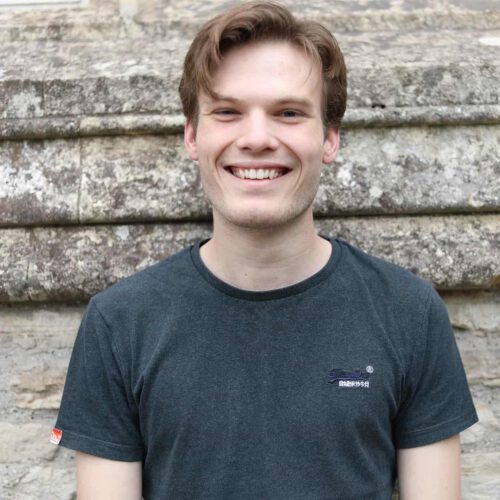
Matthew
Creative Writing Graduate
The course, above all else, inspired me and gave me the courage to write. The curriculum gives a wide range of books to read, genres to experiment and forms to try. The lecturers are passionate writers too, so knowing all around you people are writing and developing their craft, it is impossible not to feel encouraged and motivated. Even after graduating I am pursuing my writing with confidence and passion, knowing it has improved and matured during my time at Chichester.
Teaching and Assessment
Learn from published writers and English Literature experts
Teaching
Much of our teaching takes place in small groups. Within these classes, you will typically discuss good writing practice and workshop your own writing.
Our commitment to smaller class sizes allows you to feel more confident to discuss your ideas in a supportive environment. It also allows your tutors get to know you and how best to aid your development.
Assessment
Creative writing modules are predominately assessed through portfolios of work. Your English Literature modules will be assessed through essays and presentations. The Writing Placement module will be assessed through a reflective report.
Modules are assessed at every stage of the course, allowing you to clearly see your academic progress at all stages of the course.
Guest Speakers
Gain unique insight into the creative writing industry
The University boasts a blossoming writing culture and community, with regular book launches and conferences.
We also run special events with renowned creative writers. As a Creative Writing and English Literature student, you can use these as opportunities to learn more from those with critical insight into the industry.
Some renowned authors to have visited the University in recent years include:
- Poet Laureate Carol Ann Duffy
- Matthew Sweeney
- Helen Dunmore
- Jo Shapcott
- Sarah Hall
- Bernardine Evaristo
- Vicki Feaver
- Sarah Hall
- Kate Mosse
- Alison MacLeod
- John McCullough.
Work Placements
Gain vital experience within the workplace
The Work Placement module allows you to develop your skills in a work environment and gain vital experience to put you ahead in your future career.
This allows you to gain experience in, for example, a workplace such as a local newspaper or as a writer-in-residence. You will then use the skills you have learnt on your course in order to reflect critically on the world of work.
Study Abroad
Explore the opportunity to study part of your course abroad
As a student at the University of Chichester, you can explore opportunities to study abroad during your studies to enrich your educational experiences.
It’s a chance to broaden your horizons, a great opportunity to meet new people, undertake further travelling and to immerse yourself within a new culture.
You will be fully supported throughout the process to help find the right destination and institution for you and your course. We can take you through everything that you will need to consider, from visas to financial support, to ensure you get the best out of your time studying abroad.
Careers
Open up your future career options
Our Creative Writing and English graduates are highly valued by employers for their problem-solving and exceptional communication skills and often continue into a variety of diverse careers.
The key to a Creative Writing and English Literature degree is communication, and at Chichester we focus on your abilities in written and spoken expression.
Career paths include:
- Novelist
- Publishing
- Teaching
- Journalism
- Copywriting
- Marketing.
Creative writing success
The last few years have shown a fabulous flowering of our Creative Writing students’ work. Many students at both undergraduate and postgraduate level have continued on to become published writers.
Many of our students publish and win prizes. In recent years students have gone on to publish novels and poetry collections, win prizes in major competitions such as the Bridport Prize and have poems and stories in magazines such as The Paris Review and Staple.
Former Chichester Creative Writing student Bethan Roberts has recently had her novel My Policeman adapted for the silver screen in a film starring Harry Styles and Emma Corrin, whilst others have also had work broadcast on BBC Radio 4.
Postgraduate pathways
University of Chichester alumni who have completed a full undergraduate degree at the University will receive a 15% discount on their postgraduate fees.
- MA Creative Writing
- PGCEs
- Postgraduate Research (MPhil/PhD).
Course Costs
Course Fees 2027/28
UK fee
£10,050
International fee
£17,354
EU/EEA Fee Reduction Scholarship
EU/EEA students automatically pay the equivalent of UK fees via the EU/EEA Fee Reduction Scholarship
For further details about fees, please see our Tuition Fees page.
For further details about international scholarships, please see our Scholarships page.
To find out about any additional costs on this course, please see our Additional Costs page.
Entry Requirements
Typical Offer (individual offers may vary)
UCAS
104
tariff points from A levels or combination with Extended Project / BTEC / Cambridge Technical.
A Levels
BCC
including English Literature, English Language, English Language and Literature, Creative Writing or Drama at grade B or C.
Access to HE Diploma
Pass
with 12 level 3 credits worth of English units at Merit.
IB
28 points
with English Higher at 4.
IELTS
6.0 overall
with no element lower than 5.5.
Contextual offers
We believe everyone deserves an equal opportunity to pursue higher education, regardless of their background.
When we receive your application we consider your personal circumstances and the factors surrounding your achievements to see if you are eligible for a contextual offer. This is an offer with a reduced entry tariff – typically the equivalent of 16 fewer UCAS points (two A-level grades).
Applicants who are predicted to achieve two or more (A-level) grades better than the published typical offer will normally be made the typical offer, rather than a reduced offer. For example, where the predicted grades are BBB, and the published typical offer is BCC, a BCC offer would be made.
Find out more about our contextual offers.
Integrated Foundation Year Option
Build your academic knowledge, skills and confidence before your studies begin
If you are interested in studying Creative Writing and English, but would benefit from a better foundation of knowledge in the subject, or if you don’t think you will achieve the current entry requirements for the course, why not consider an integrated foundation year route.
This four-year course aims to build your academic skills and knowledge with an introductory first year, allowing you to confidently embark on an full undergraduate degree. After successfully passing the foundation year, you will move onto the standard degree course programme with the academic tools needed to succeed.