Chichester researcher backs call for stronger measures to counteract doomscrolling
In an always-on world where it’s reported that adults spend an average of 4.5 hours a day scrolling online content, a Chichester-based researcher is backing calls to help combat the negative effects of doomscrolling. With both the UK government and the EU calling on media companies to take action in recent days, what’s the science behind doomscrolling and what potential solutions are out there?
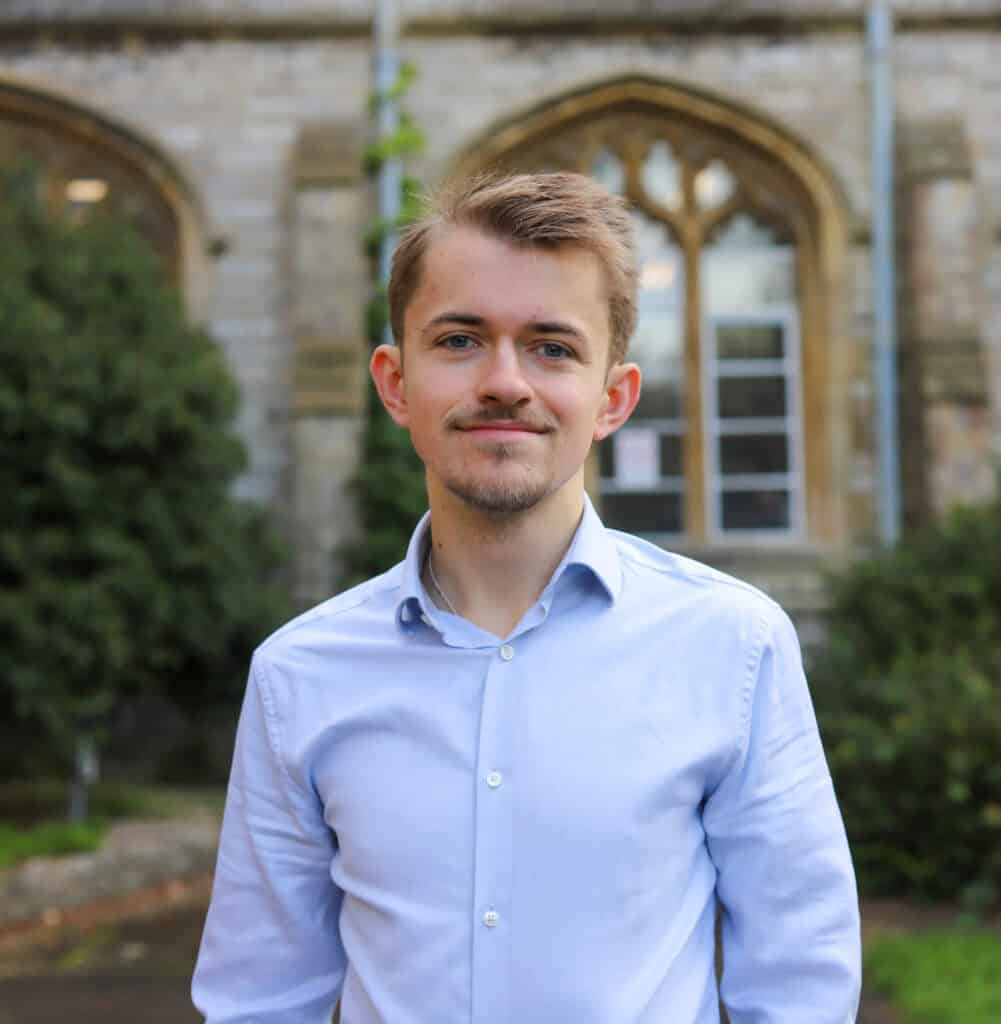
Alexander Sharpe, Associate Lecturer in Psychology and PhD student at the University of Chichester, recently completed a detailed review of the existing research on this contentious topic and it makes for fascinating reading.
Alex explained: “There’s not a great deal of current research on doomscrolling and its potential effects on mental health, but I wanted to understand what we know so far and the practical implications. I’m currently collecting data on the doomscrolling habits of a range of people from across the world with the eventual aim of developing an empirically tested intervention which could help tackle doomscrolling through behavioural change.”
Doomscrolling is the compulsive consumption of negative online content, and its relationship with mental health and wellbeing. But what makes it so addictive?
Alex said: “Social media platforms and online apps deliberately encourage continuous engagement by using design features like infinite scrolling and personalised content algorithms. These engagement-driven design elements have been found to significantly increase compulsive use and undermine the user’s capacity to disengage and walk away.
“All the current evidence shows that doomscrolling is very bad for you. It can drive negative thought patterns and increase feelings of anxiety and despair about the world.”
Previous research has shown that ‘Negative content tends to attract more interactions, clicks, shares and comments. It becomes more visible, creating a feedback loop in which distressing content is repeatedly surfaced.’ (Brady et al, 2017)
The UK government is currently looking at introducing a social media ban for under 16s, due to concerns about how it is affecting young people.
Alex said: “It’s hard to definitively say if under 16s are more likely to be affected by doomscrolling, because the research isn’t there yet. It could be seen as a risk to young minds as they are fed more and more negative content by the algorithms, whereas previously negative thoughts might be more easily challenged by friends and family.”
“Tackling infinite scrolling could be one of the ways to address doomscrolling and its negative effects. It’s incredible just how quickly technology is changing and it’s right that the government is looking into how to respond to this. People need to be cautious of just how easily the structure of these apps can trap you into engaging with negative content.”
As for what his future intervention might look like, Alex added: “It’s too early to say at this stage of my research, but one area that I’ll be looking at is how people interact with negative content. Is there is a way that we could transform that behaviour into something more positive?”
To read the scoping review, visit https://www.researchgate.net/publication/399453882_The_Influence_of_Doomscrolling_on_Mental_Health_A_Scoping_Review