Dr Rachel King
Senior Lecturer in Biological Psychology
About
Rachel has a DPhil in Experimental Psychology conferred by the University of Oxford, a research MSc in Psychology granted by the University of Amsterdam (Major: Brain & Cognition, Minor: Clinical) and a BSc in Psychology granted by the University of Portsmouth. For her DPhil she received a Marie Curie Early Stage Researcher Fellowship on an International Training Network project investigating individualised diagnostics and rehabilitation of attentional disorders.
Since joining the University of Chichester, Rachel has transitioned from Associate Lecturer to Senior Lecturer, with a focus on Biological Psychology, Experimental Research Methods and Applications of Technology in Research and Practice. She serves as Programme Lead for the MSc in Neuropsychology and oversees the Psychology Laboratory.
Rachel has previously been a member of the research ethics committee, with an interest in research integrity and the role of mental capacity in research consent. She is also a member of the REF 2029 submission team, focusing on research impact.
Professional
Rachel is a Fellow of the Higher Education Academy (FHEA) and a member of the British Psychological Society and the British Neuropsychological Society.
Module Responsibility
Current Module responsibilities:
- Level 5 BSc Biological Psychology
- Level 7 MSc Neuroanatomy and Neurophysiology
- Level 7 MSc Clinical Psychology, Life Coaching and Technological Applications
- Level 6-7 BSc & MSc Independent Project Supervision
Previous Module responsibilities:
- Level 5 BSc Experimental Design and Analysis
- Level 4 BSc Experimental Approaches in Technology Usability & Cognition
- Level 4 BSc Foundations in Research Methods
Research Grants
Active Research Grants:
- Woodgar Trust Project £160,000 – Evaluating the effectiveness of VR based executive functioning training for school age children
Previous Research Grants:
- Sage House Evaluation £70,000 – Evaluating the effectiveness of the Sage House Model of Dementia Support.
- BPS Undergraduate Research Assistantship (Erin Thompson) £2,160 – The lived experience of applying for the personal independence payment from the perspective of individuals who have experienced stroke.
Publications
- Hindman, S., King, R., & Pereira, A. (2026). Exploring virtual reality–based executive function training for primary-aged students with executive dysfunction: A mixed methods case series. Learning in Context, 3, Article 100019. https://doi.org/10.1016/j.lecon.2026.100019
- King, R. L., Warren, S., Vass, E., Sharpe, B. T., Beaumont, K., Seymour, S., Bell, S., & Pereira, A. (2026). A community-based integrated partnership approach to living well with dementia: Evaluating the impact of the Sage House Model (Version 1) [Preprint]. medRxiv. https://doi.org/10.64898/2026.01.10.26343830
- Jones, S., Sharpe, B. T., King, R., Waldeck, D., & Tyndall, I. (2025). Putting on a disguise to fit in: A mixed methods study of experiences in autistic camouflaging. Research in Neurodiversity, 1, Article 100004. https://doi.org/10.1016/j.rin.2025.100004
- Sharpe, B. T., King, R., Banerjee, M., Keates, S., Tyndall, I., Kooner-Evans, P., Sivyer, L., Cotten, E., Obine, E., Tabet, N., Ronen, I., Davies, N., Lewis, I., Tabbner, S., Wilkins, T., & Pereira, A. (2025). Experiences of individuals living with dementia, caregivers, and service providers regarding independence-enhancing technologies: Focus group insights. Disability and Rehabilitation: Assistive Technology, 20(8), 2915–2934. https://doi.org/10.1080/17483107.2025.2511996
- Sharpe, B. T., Sharpe, A. T. R., Poulus, D. R., Obine, E. A. C., King, R., Birch, P. D. J., & Gladwin, T. E. (2025). Enhancing pressurized esports performance: A pilot study on the combined effects of transcranial direct current stimulation and arousal reappraisal. Anxiety, Stress, & Coping, 38(6), 641–657. https://doi.org/10.1080/10615806.2025.2502792
- Hindman, S., King, R., & Pereira, A. (2025). Virtual reality–based executive function training in schools: The impact of adaptivity on executive function and motivation. Computers & Education, 234, Article 105344. https://doi.org/10.1016/j.compedu.2025.105344
- Torres-Cruz, M., Moura-Alves, M., Lima, R. P., King, R., dos Santos, C. A., Almeida, T. S. J., Callamari, F. B., Kolchraiber, F. C., Marega, M., Atalla, M. H., Amaro, E. J., Sato, J. R., & Kozasa, E. H. (2025). A physical activity and socioemotional intervention for residents of a large vulnerable community in Brazil during the COVID-19 pandemic: A randomized controlled study. Frontiers in Public Health, 13, 1463401. https://doi.org/10.3389/fpubh.2025.1463401
- King, R. L., Warren, S., Vass, E., Beaumont, K., Seymour, S., Bell, S., Sharpe, B. T., Pacella, R., & Pereira, A. (2025). Innovating dementia support: An evaluation of cost-effectiveness and wellbeing outcomes of the Sage House Model. Alzheimer’s & Dementia: The Journal of the Alzheimer’s Association, 21(Suppl. 4), e102222. https://doi.org/10.1002/alz70858_102222
- King, R., Buxton, H., & Tyndall, I. (2024). Aphantasia and autism: An investigation of mental imagery vividness. Consciousness and Cognition, 125, Article 103749. https://doi.org/10.1016/j.concog.2024.103749
- Hindman, S., King, R., & Pereira, A. (2024). Virtual reality–based executive function training in schools: The experience of primary school-aged children, teachers and training teaching assistants. Computers in Human Behavior Reports, 16, Article 100500. https://doi.org/10.1016/j.chbr.2024.100500
- King, R., Surrell, I., Sharpe, B. T., Beaumont, K., Vass, E., Seymour, S., … Pereira, A. (2023). An integrated approach to dementia support: Sage House. Alzheimer’s & Dementia: The Journal of the Alzheimer’s Association, 19(Suppl. 20), e075707. https://doi.org/10.1002/alz.075707
- King, R. Attentional Control of Goal-Directed Behaviour (DPhil Thesis). University of Oxford. ORA University Archive
Research
Rachel is a member of the Cognitive Aging and Dementia Lab with an interest in brain health and quality of life for individuals living with cognitive differences.
For her DPhil she worked on attentional processes involved in top-down control of goal directed behaviour. This included neuropsychological work examining the functional impact and lesion neuroanatomy of impaired selective attention following stroke and experimental work examining goal neglect and dual task processing. She has also previously piloted a cognitive training programme for executive dysfunction following stroke and been involved in a project examining cognitive decline following deep brain stimulation for Parkinson’s disease.
Rachel’s research focuses on interventions designed to improve quality of life for individuals with cognitive difficulties. Her work develops and evaluates approaches that improve cognitive performance through mechanisms of neuroplasticity (e.g., VR-based cognitive training, transcranial direct current stimulation (tDCS), and lifestyle interventions), as well as interventions that strengthen assessment processes and access to supportive models of care (e.g., the Sage House Model of Dementia Support).
PhD Supervision
- PhD project (Susan Hindman): Use of virtual reality based cognitive training to support cognitive development in school age children – Director of Studies
- Clinical PhD project (Camille Cousley): Improving the assessment of mental capacity for individuals with dementia in an acute hospital setting. – Director of Studies
- Clinical PhD project (Ross Webster) – Improving clinical decision making regarding the implementation of non-beneficial treatment during end-of-life care. – Part of the Supervisory Team
- PhD Project (Emmanuel Obine) – Feasibility and Efficacy of Virtual Reality Cognitive Training Designed for Individuals Living with Mild Cognitive Impairment. – Part of the Supervisory Team
- PhD Project (Riz Judkins) – Intermittent Fasting as a tool for Improving Cognition for individuals Living with Mild Cognitive Impairment and Dementia. – Part of the Supervisory Team
- PhD Project (Josephine Ambalada) – Sensory Sensitivities and Gut Health in Autistic Individuals. – Part of the Supervisory Team
Other department members
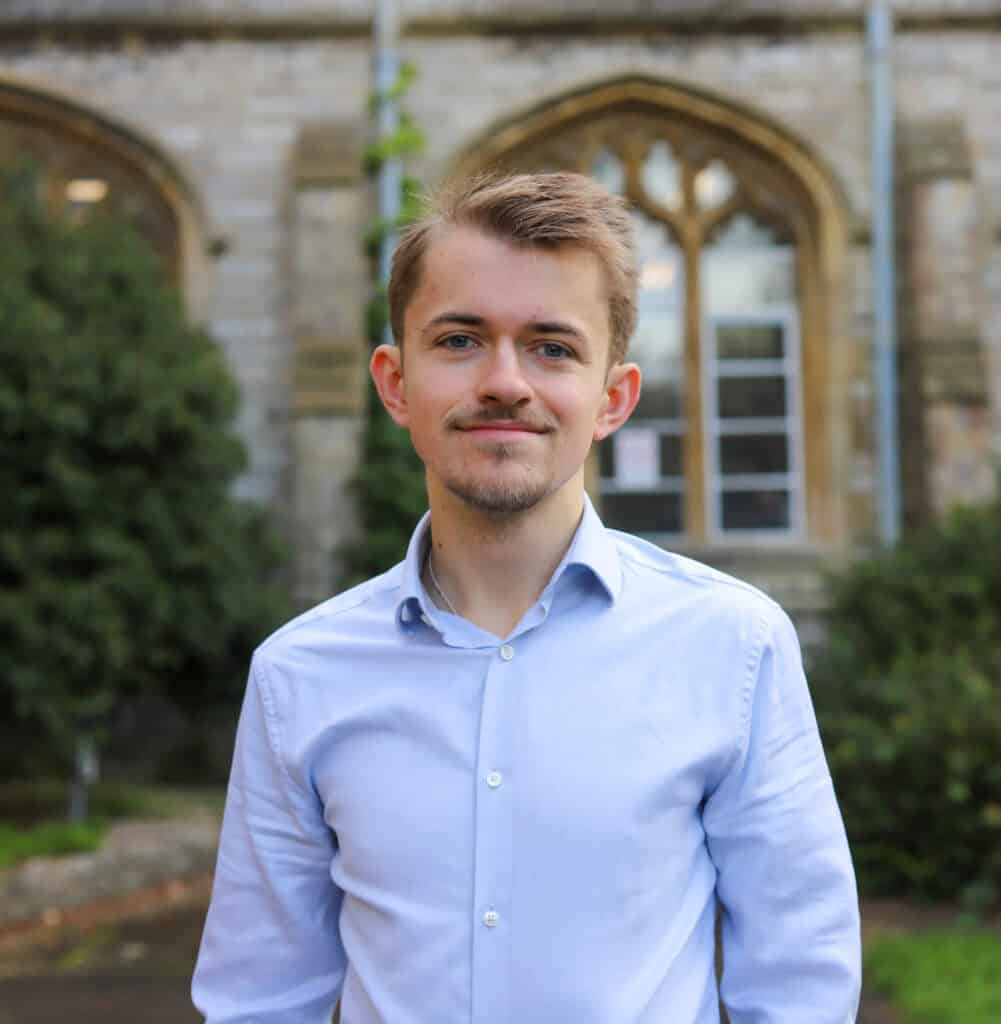
Alexander T. R. Sharpe
Associate Lecturer in Psychology, Department Administrator