Circus exhibition celebrates 100 years of ceramic artist Eric James Mellon at the University of Chichester
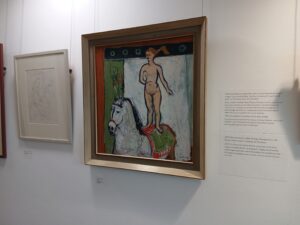
An exhibition held at the University of Chichester marks 100 years since the birth of ceramic artist Eric James Mellon.
Curated by his daughter Tessa Cox, the collection is centred around ‘circus’, one of the themes that Eric focused on during his long career, and features a display of ceramic pieces from the 1950s to 2010s.
Eric lived with his wife, fellow Fauve-inspired artist Martina Thomas, and two children in Rose Green, Bognor Regis, and had close connections with the University before he died in 2014, aged 88. He spent time working with the art department and is featured in the Otter Memorial Papers, a collection of papers on local heritage and culture. He also ran regular summer schools at the nearby Slindon College. The University now holds some of his artwork and papers in its special collections.
Tessa said: “The exhibition celebrates different mediums to show the style Eric had, and his ceramic form intended always to maximise surface area. He would use the pot as a canvas.
“While he was training, he learned all aspects of two‑dimensional art. Later art education changed, and I often heard him expressing dismay at how teaching art was being pushed aside in schools and colleges, which he saw as a lack of encouragement for creativity and imagination, and felt art students were being neglected. I think whatever medium you gave him, he would have excelled in as he was a pure creative.”
Eric was known for his ceramic art – and he discovered decoration on ceramics was more likely to sell than art alone. His work centred around mythology, theology and the human form.
The centre-piece of the exhibition is Circus Horse & Rider – an oil painting and ceramic charger from The Bishop Otter Art Collection held at the University, and this led to the theme of circus for the exhibition.
“The circus theme appealed to Eric, especially the idea of human trust. In the Middle Ages, the church was central to people’s lives,” Tessa said. “Then came the circus, with its trapeze artists whose ‘leap and catch’ represented trust between people – a shift from faith in God to faith in one another in a more secular society. That is what interested him, which he explored in paint, print, and ceramic decoration.”
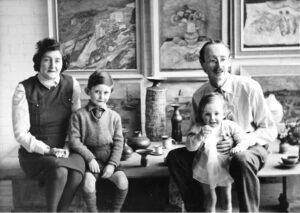
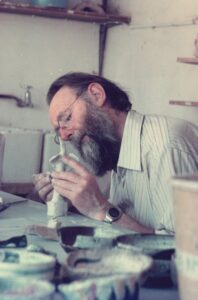
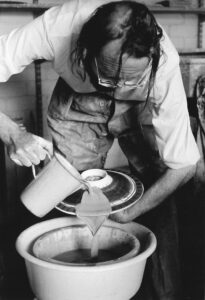
As well as prints and ceramics, the exhibition includes photographs of Eric working as a younger man, which Tessa thought was important to show as most representations of him in the public sphere show him in later life.
“The ones that show him working, you see his real personality in those earlier images,” Tessa said. “It shows Dad as he was. He loved his life as an artist with my mother. It’s a lovely way to mark 100 years and celebrate what he has done.”
The exhibition is available to view at the Learning Resource Centre at the Bishop Otter Campus until 15 February. For opening times, visit: help.chi.ac.uk/opening.