• Top 15 in the UK for student satisfaction for Nursing Complete University Guide 2027
  • 92% positivity for teaching on my course National Student Survey 2026
  • 1st in the UK for overall positivity in Nursing National Student Survey 2026
Join us at one of our Open Days!
  • Saturday 21 November 2026
Our next Open Day is in:
  • Days
  • Hours
  • Minutes
  • Seconds
Book your Open Day

Overview

Become a highly-skilled, digitally-competent and compassionate nurse

NHS Learning Support Fund

You will receive at least £5,000 a year, with further funding available for eligible students. You can find out more on the NHS website.

On our BSc (Hons) Adult Nursing course, we offer small cohorts in a community. During the course, you will develop into a resilient, attentive and caring professional, ready for the ever-changing and dynamic healthcare sector.

We welcome curious learners who are looking to make an impact on people’s lives by learning the skills and procedures that help patients, and to pursue a career with excellent employment prospects.

Finalists for two Student Nursing Times Awards

We’re proud to be finalists for two Student Nursing Time Awards 2025 in the following categories:

  • Nurse Education Provider of the Year
  • Teaching Innovation of the Year
Student Nursing Times Awards Finalist

Study on a nationally-accredited course

This course is accredited against the Nursing & Midwifery Council’s (NMC) 2018 standards, enabling you to be eligible to seek admission to part 1 (Adult) of the NMC register on successful completion of this three-year programme.

The NMC has assessed the course as requiring no improvements against 2018 standards, which is an exceptional outcome. This means you can be confident that you will be gaining the required level of theoretical and clinical training to succeed as a graduate nurse.

Nursing Midwifery Council (NMC) logo

Develop your person-centred approach

You will learn how to observe patients and assess their needs to plan and deliver the most appropriate care for them and evaluate the results.

We will support you in becoming a caring and compassionate professional who delivers skilled, evidence-based care in partnership with patients, families and communities.

BSc (Hons) Adult Nursing

Learn more about our Nursing courses and explore our range of outstanding facilities.

Experiential learning through cutting-edge technology

Our innovative facilities enables you to experience creative teaching methods and real life immersive learning experience through recreated case studies that utilise robotic mannequins, augmented reality in our immersive room and actors.

Staff in the school are experts in this field with published research in simulation-based learning, and Senior Lecturer James Wilson is a National Teaching Fellow with expertise in Forum theatre.

Facilities include

  • Immersive sensory simulation space
  • Virtual reality equipment
  • Six-bed clinical practice area
  • Responsive robotic mannequins

Work alongside our practice-experienced staff

Our skilled and expert staff are all clinicians in practice, who will support you to achieve your learning goals.

As a curious and motivated learner, we will work with you in developing your study skills and ability on your journey to becoming a professional nurse registrant.

Discover our supportive community

We pride ourselves on our community and the support we offer our students. Our smaller class sizes ensure that you will be known by name and truly valued, as you feel the support of your personal tutor from the moment you join.

On this course you will:

  • Learn how to deliver the most appropriate, evidence-based care for patients.
  • Become a resilient, attentive and compassionate professional.
  • Graduate ready to enhance the quality of person-centred care.
  • Develop a strong, professional network that strengthens your career opportunities.
  • Gain elevated digital skills to prepare you for a rapidly evolving health and social care sector.
  • Engage in annual inter-professional conferences.

The Course

Learn through a combination of theory, simulation, practical sessions and placements

Throughout the three years of the course, you will undertake placements at local healthcare institutions to provide you with the required level of experience and knowledge for a registered nurse.

Your on-campus studies to help you learn and develop as a professional nurse.

Study areas include:

  • Caring sciences
  • Person-centred care
  • Professional issues
  • Health and wellbeing
  • Mental and physical health conditions
  • Preparing for practice learning.

Year One

In your first year, you will focus on the foundations of anatomy and physiology alongside your introduction to the concept of person-centred care. You will also explore the fundamentals of caring science and its relationship to compassionate nursing practice., alongside a focus on your personal development as a practitioner.

Year Two

Your second year continues to develop your caring science knowledge and practical clinical skills, as you expand your understanding of clinical decision making in response to adult patient deterioration.

You will also explore the subject of pharmacology and its applications within nursing, as you develop your ability to work within a healthcare team dynamic.

Year Three

In your third year, you will develop your understanding of person-centred care in relation to those with complex needs and those who need end of life care. In addition, you will explore the delivery of effective nursing leadership and policy development.

Your final year also sees you focus on working across healthcare systems, as you prepare to work in array of care settings and develop your leadership and management skills.

Dr Nita Muir - Head of School of Nursing and Allied Health

Dr Nita Muir

Head of School of Nursing and Allied Health

As a graduate entry nursing student at the University of Chichester, you will become part of a supportive university and wider nursing community on a small friendly campus where lecturers know your name and are approachable. You will become a compassionate, person-centred Registered Nurse with confidence in your practice and learning. You will be an be an active learner throughout; seeking opportunities in your development and learning closely from your peers both at university and in practice learning.

Modules

This list is indicative and subject to change.

Preparation for Practice Year 1

This module will cover the communication and relationship management skills and nursing procedures for Part 1 of the programme that must be able to demonstrate in order to meet the proficiency outcomes of the Future Nurse: Standards of proficiency for registered nurses (Nursing and Midwifery Council [NMC], 2018).

Becoming A Professional Nurse

This module will introduce you to the concepts of professionalism in relation to the specific profession of nursing.

For example:

  • Duty of care
  • Duty of candour
  • Accountability
  • Self-regulation and autonomy

The legal and ethical frameworks that govern nursing practice and finally this module will explore the values and skills required to become a professional such as reflection, resourcefulness and emotional intelligence to support effective person-centred care.

Introduction to Neighbourhood health

This module introduces the concept of neighbourhood health as a foundation for promoting physical and mental wellbeing across diverse communities. It explores early human development and genomic influences, and the impact of climate health on individuals and populations.

Students will examine family-centred care, transitions of care and social prescribing to understand collaborative and interprofessional approaches that optimise health within neighbourhood contexts.

Aligned with key Sustainable Development Goals, particularly those focused on health, inequality and climate action, the module highlights how environmental, genetic and social determinants interact to shape population health.

Evidence informed strategies will support leaners to apply sustainable holistic approaches to improving wellbeing across communities.

Introducing Person-Centred Care

This module will cover the foundational knowledge of human anatomy and physiology by examining key body systems and in relation to common patient presentations which are fundamental to nursing assessments and developing appropriate care plans.

Specific attention is paid to the physiological aging process, and introduction to pharmacological management of common patient presentations.  

Caring Science: An Understanding of Evidence-Based Practice

This module will cover the concept of caring science defined as the underpinning evidence-base for holistic nursing practice.

Through an evaluation of research methods, ethics and governance, the ability to apply a range of evidence, drawing on experience to make evidence informed decisions will be explored.

Preparation for Practice Year 2

This module will cover the communication and relationship management skills and nursing procedures for Part 2 of the programme that must be able to demonstrate in order to meet the proficiency outcomes of the Future Nurse: Standards of proficiency for registered nurses (Nursing and Midwifery Council [NMC], 2018). 

Understanding Illness for Nursing

This module will focus on providing person-centred care with people with multi-morbidities across a wide range of integrated care settings. This will include coordinating safe, across agency working and effective transfer of care or discharge to home.  

Developing as a Professional Nurse

You will continue to cover the skills and abilities required to develop, manage and maintain appropriate relationships with people, their families, carers and colleagues. This module will also revisit and strengthen the developing skills of self-reflection, resilience and emotional intelligence.

Delivering Person-Centred Care

This module will cover understanding and recognising the need to respond to the challenges of providing safe, effective and person-centred nursing care for people who have complex care needs specifically end of life care.

Caring Science in Population Health

This module will cover the understanding and application of the aims and principles of health promotion, protection and improvement, as well as the prevention of ill health when engaging with people and examining global patterns of health and wellbeing outcomes.

In alignment with the United Nations Sustainable Development Goals, particularly those focused on good health and wellbeing, reducing inequalities and supporting sustainable communities.

Students will explore how health-promoting strategies contribute to improving population outcomes within both local and global contexts. 

Preparation for Practice Year 3

This module will cover the communication and relationship management skills and nursing procedures for Part 3 of the programme that must be able to demonstrate in order to meet the proficiency outcomes of the Future Nurse: Standards of proficiency for registered nurses (Nursing and Midwifery Council [NMC], 2018). 

Being a Professional Nurse

This module will cover how systemic failures in the delivery of care can be minimised through effective nursing leadership, how nurses can influence policy development and promote the profession of nursing at an individual level and within the wider context of systems. 

Maintaining Person-Centred Care

This module will cover the knowledge and ability to respond proactively and promptly to signs of deterioration or distress in mental, physical, cognitive and behavioural health and use this knowledge to make sound clinical decisions.

The subject of pharmacology applied to nursing and the principles of safe and effective administration and optimisation of medicines will also be covered.  

Caring Science for Quality Improvement

This module will cover an understanding and application of the aims and principles of quality improvement through an evaluation of the quality and effectiveness of nursing care.

You will also cover the importance of undertaking a collaborative approach to quality improvement and how health economics contributes to quality improvement through measures of efficiency, effectiveness, value and behaviour in the production and consumption of health and healthcare.

Facilities

Experience exceptional on-campus facilities that help you thrive

School of Nursing and Allied Health

The School of Nursing and Allied Health is based on the Bishop Otter campus, you will learn both on campus and in a variety of practice and simulation settings.

All learning will be supported by our lecturers in a safe and controlled setting and by your practice assessors and supervisors in health and social care environments.

Immersive sensory learning technologies

Explore our immersive learning and simulation rooms that recreate sounds and visuals from a range of clinical settings, supported with the latest virtual reality technologies.

Take a 360 tour (opens in a new tab):
Immersive Simulation Room
Simulation Room 2

Health One building tour

Watch our virtual tour of our specialist Nursing facilities within our dedicated Health One building located on our Bishop Otter campus.

Bishop Otter campus

Watch our virtual tour of our historic Bishop Otter campus in the heart of Chichester and explore everything the campus has to offer.

Six-bed ward environment

Our six-bed ward environment recreates a hospital setting, allowing you to practice basic nursing skills in a realistic simulated setting.

Robotic mannequins

Our responsive robotic mannequins allow you to simulate a variety of clinical procedures and situations ahead of your placement experiences.

Immersive sensory learning technologies

Experience our immersive learning room that recreates sounds and visuals from a range of clinical settings, supported with the latest virtual reality technologies.

Expert and supportive staff

Our experienced teaching staff include clinicians in practice and are here to support you as you develop into a competent graduate nurse.

Specialist library facilities

You will have access to additional resources available from our partners who support your practice learning, including the specialist library facilities at the local St Richard’s Hospital.

Develop your digital competency

Gain critical experience of digital materials such as clinicalskills.net, Electronic Practice Assessment Documents and anatomical software with Hololens technology.

Flexible teaching space

Our newly developed HealthOne building includes dedicated teaching spaces that can transform into a variety of layouts and functions.

Learning and social hub spaces

Our commitment to a friendly and inclusive student community includes dedicated learning and social spaces within our HealthOne building.

Learning Resource Centre

The on-campus Learning Resource Centre (LRC) contains the library, a cafe, IT/teaching rooms and the Support and Information Zone (SIZ).

Molly Nursing

Molly Ntange

BSc (Hons) Adult Nursing student

As a nursing student, I don’t think there is a better university out there. We feel cared for and strongly supported by our lecturers. They know us by our names which makes our relationship with them even better, we can approach them any time. The lectures are top notch with the highest possible standard. I am very privileged to be part of the pioneer nursing cohort. Studying nursing at this university is the best decision I have made for myself and my children.

Daniel Grigorita

BSc (Hons) Adult Nursing student

Learning in a small cohort is a very good experience, as everyone feels comfortable to ask questions and have open discussions during lectures and seminars. I feel that my aspirations are seen and valued here and that I’ll learn a lot more than just the required skillset by the time I qualify.
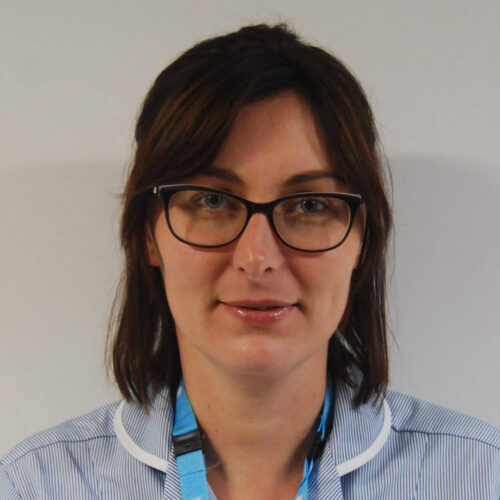
Marta Kumczyk

BSc (Hons) Adult Nursing student

The lecturers are all passionate about their subjects and come from different areas of healthcare that makes studying so interesting. This course really is so worth it for young and mature students as childcare and personal circumstances are taken into consideration.

Being a Nursing student

Learn more about what it’s like to be a Nursing student at the University of Chichester.

Teaching and Assessment

Innovative teaching delivered by expert and supportive staff

Collaborative learning

You will experience a range of different techniques such as enquiry-based learning groups, blended learning, keynote lectures and small group seminars.

Our innovative and supportive teaching approach is based on a collaborative learning philosophy, which encourages you to learn with and from other and achieve your own learning goals.

Experiential learning

From clinical practice settings to recreations of community nursing settings, our use of modern, highly-equipped simulation environments and situations combined with our simulated-based approach to learning develops your professional practice skills and your confidence ahead of your clinical placements.

You will have the chance to simulate various clinical situations with both actors and real service users in care.

Digital competency

We will work with you to develop your digital competencies across the three years as you utilise a range of technologies which will support your learning both now and in your future career.

We are exploring new technologies constantly and you will be exposed to virtual learning environments that recreate clinical scenarios, in addition to using an online learning practice portfolio and developing your own vlog.

Varied assessment methods

Your placements are assessed through an electronic portfolio, alongside more traditional forms of assessment for your clinical learning. Half of these are completed in practical sessions and can include presentations, essays, case-study analyses and multiple-choice exam questions.

Meet our teaching staff

You’ll be taught by academics, with many who are registered practitioners from a variety of clinical backgrounds. Healthcare qualifying degrees offer a range of options for future employment both internationally and nationally. Roles can be within emergency care, primary care, end-of-life care and development into becoming advanced practitioners.

  • Nita Muir

    Head of the School of Nursing and Allied Health

    Nita is an active researcher as an Adult Registered Nurse and academic with an international reputation, with a particular focus within community nursing and nurse education.

    She has undertaken evaluative consultations for Health Education Improvement Wales, is a member of the British Safety Institute, and is on the editorial board of a national nursing journal.

    At an international level, Nita has participated in global research and led funded innovation projects to develop sustainable curriculum with colleagues in Zambia, Sweden, Denmark and China.

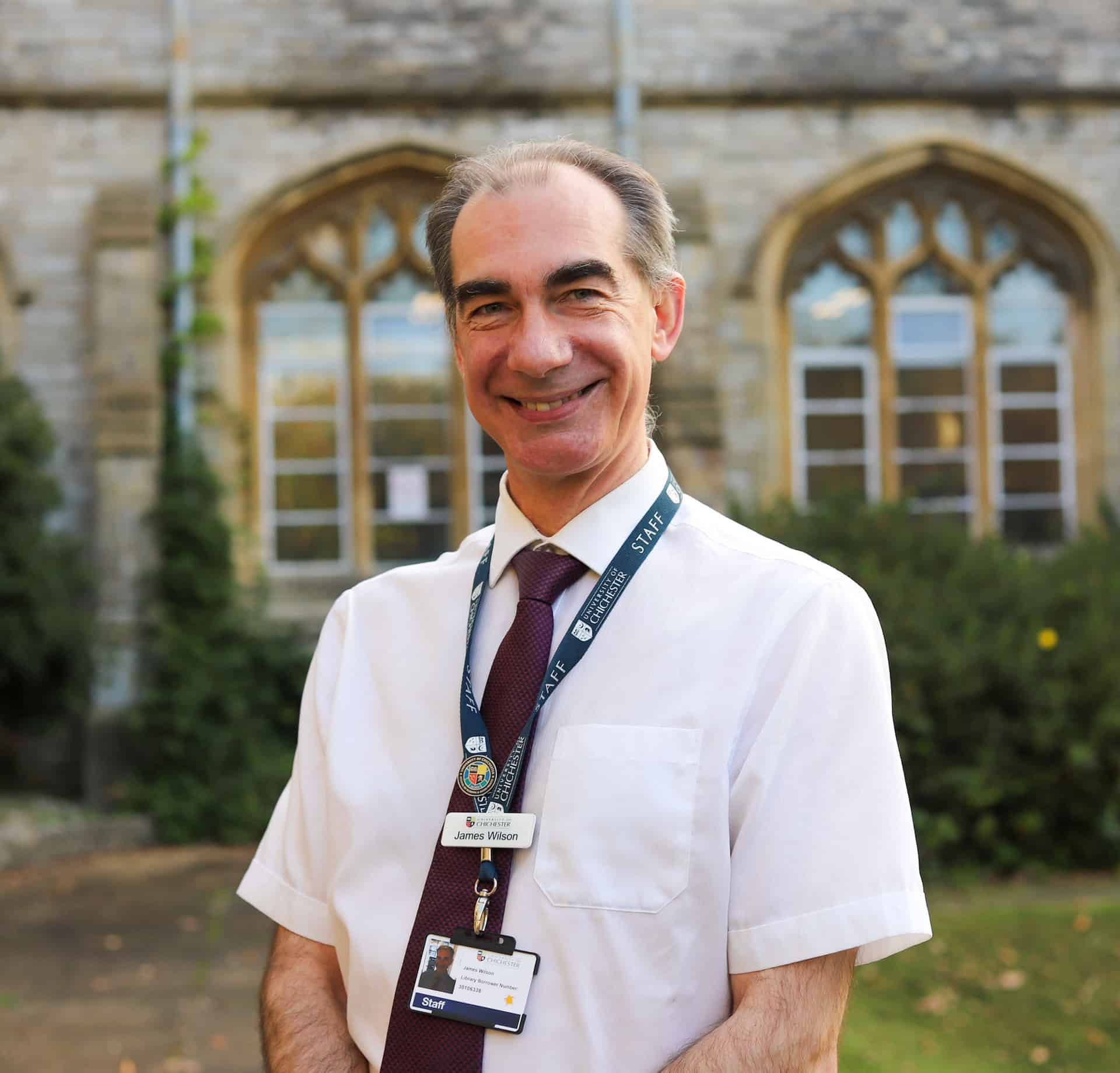
  • James Wilson

    Senior Lecturer in Nursing

    James is an award-winning nurse academic recognised for his student-focused work in nurse education and interactive theatre. James is a Registered Mental Health Nurse and an innovator in education. He successfully applies transformative learning theory to an immersive suite of drama-based approaches that have since gained national and international recognition and his research interests are in this field. He is also National Teaching Fellow.

  • Erika Thorne

    Senior Lecturer in Nursing (Practice Learning)

    Erika has been a Senior Lecturer in Nursing for the last 10 years, moving after 25 years from a successful and enjoyable clinical career in critical care. She is a Fellow of the Higher Education Academy and her areas of educational practice include critical/acute care, simulation, pedagogy and practice learning. Erika has a research interest in exploring simulated based education.

Work Placements

Transfer the theory into real life practice

Gain vital practice experience

Practice learning will occur within allocated health and social care placements, which start from December: around three months after you start with us. You will undertake approximately six placements of around eight to 10 weeks each.

These placements range across a variety of clinical settings to ensure you experience all fields of nursing, a variety of experiences and the range of hours expected of registered nurses.

Placement allocation

Whilst placement allocation is based on availability across the sector, it is non-negotiable as there is consideration of your home address and travel required. In some instances where travel to placement will be up to one and half hours from your home address, there is a travel bursary available to support this.

Expect to:

  • Attend across the seven day week 24/7
  • Travel one-and-a-half hours one way to placement
  • Work in a range of clinical settings i.e. at home, in community and at hospital.
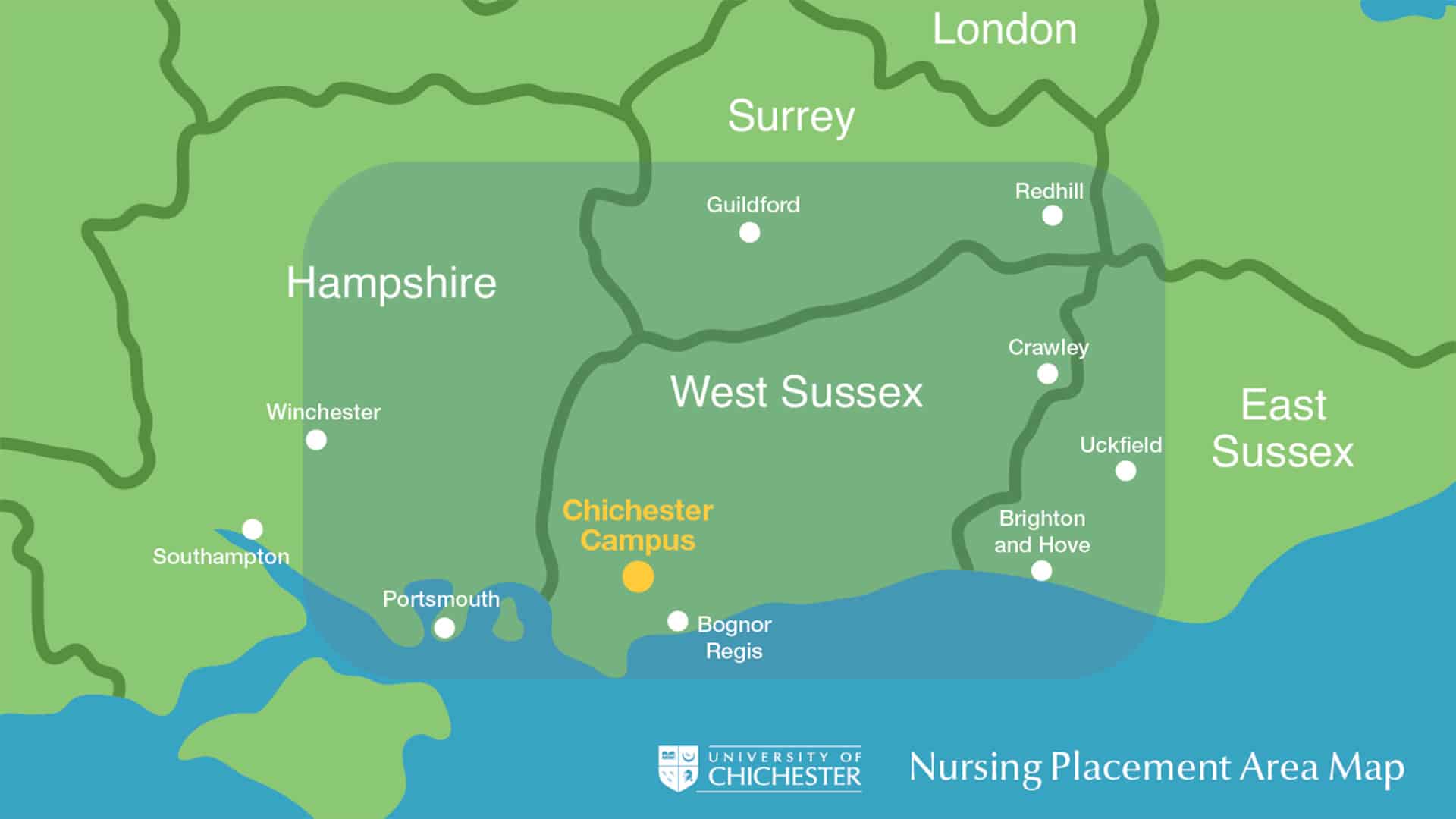
a map showing a 1.5 hour radius from Chichester of where placements will be

Please note, the map above provides an overview of the placement areas and not an accurate representation. Placement travel time will be up to an hour-and-a-half from the Bishop Otter campus.

Careers

As a registered nurse, you’ll have a varied and fulfilling career ahead of you

Graduate ready for a career in healthcare

As a University of Chichester BSc (Hons) Adult Nursing graduate, you will demonstrate an elevated level of compassionate leadership, excellent digital literacy skills, resilience and evidence-based knowledge which is person-centred and will prepare you to enter a modern-day nursing workforce.

Become a core part of a healthcare team

Adult nurses are a key part of the multidisciplinary teams that care for patients. You will be at the centre of teams which can include: social workers, doctors, occupational therapists, pharmacists, radiographers and healthcare assistants. You’ll also work closely with patients’ families and carers.

Prepare for your future with a bespoke careers day

A bespoke careers day is offered with our local health and social care employers designed to prepare you for your future applications, and assist your decision making for your future career in nursing.

Career support

As a University of Chichester graduate, we will provide you with clear guidance for future career choices across the healthcare sector. There will be an opportunity to attend recruitment fairs with local employers, who will be keen to recruit you.

Open up your career options

After completing your degree, your career options are wide and varied. There are opportunities in advanced practice in clinical, research, education and leadership areas.

Potential careers include:

  • Community nurse
  • Critical care nurse
  • Palliative care nurse specialist
  • Practice nursing
  • Care home manager
  • Nurse educator
  • Nurse researcher
  • Nurse leader.

Course Costs

Course Fees 2027/28

EU/EEA Fee Reduction Scholarship

EU/EEA students automatically pay the equivalent of UK fees via the EU/EEA Fee Reduction Scholarship

For further details about fees, please see our Tuition Fees page.

To find out about any additional costs on this course, please see our Additional Costs page.

Course specific costs

  • One uniform will be provided but you are likely to require additional uniforms which cost in the region of £30.
  • The University will pay for an occupational health assessment, however you may need to pay for immunisations if they are not covered by your GP.
  • You will need a pair of suitable comfortable shoes while on clinical placement and studying in our simulation settings (estimated cost £40- £60).
  • You will need to purchase some of your own clinical items, for instance a stethoscope and fob watch (estimated cost £30).
  • You will need to be able to travel to your placement.

NHS Learning Support Fund

You will receive at least £5,000 a year, with further funding available for eligible students. You can find out more on the NHS website.

Interview

Your interview will be conducted online through SAMMI®, a flexible and user-friendly virtual platform. This means you can complete your interview at a time that works best for you within your chosen six-day window. The interview will follow a Multiple Mini-Interview format, designed to give us a well-rounded view of the skills and qualities you need to become a competent Health Care Practitioner.

For more information on the interview process, please visit our Interviews and Auditions page.

Entry Requirements

Typical Offer (individual offers may vary)

tariff points. A science is preferred but not essential.

a science is preferred but not essential.

in Health/Healthcare Science.

in Health or Applied Science.

with 60 credits overall. At least 45 credits at level 3, with 15 credits at distinction and 30 credits at Merit. Must be in Health Studies, Nursing or Science.

in English Language, Mathematics or higher (Functional Skills English and Maths Level 2 Pass are accepted equivalents) and Science at C/4 or higher.

with no component lower than 6.5.

Foundation Year in Health and Exercise Science

If you are concerned about the required grades for Adult Nursing, we offer an access route via our Foundation Year programme.

Please note that this Foundation Year is academically part of the BSc (Hons) Sport and Exercise Science with Foundation Year programme. Upon successful completion of the Foundation Year, you will have the option to interview for progression onto the BSc (Hons) Adult Nursing degree (or choose one of our other listed Health or Sport routes).

As Nursing is a regulated profession, your entry is conditional on a successful interview, occupational health checks, and appropriate DBS clearances. For more information about this route of entry, visit our Foundation Year in Health and Exercise Science course page or email admissions@chi.ac.uk.

Contextual offers

We believe everyone deserves an equal opportunity to pursue higher education, regardless of their background.

When we receive your application we consider your personal circumstances and the factors surrounding your achievements to see if you are eligible for a contextual offer. This is an offer with a reduced entry tariff – typically the equivalent of 8 fewer UCAS points (one A-level grade).

Find out more about our contextual offers.

Further requirements

  •  Must be at least 18 years old by the time of the first placement (November of the first semester)
  • Capability in digital and technological literacy
  • Evidence of study within the last five years

Background checks

We are required to verify that you are of good health and character. We achieve this through a satisfactory occupational health assessment and enhanced disclosure and barring service (DBS) check on entering the programme. You are required to self-declare this on an annual basis.

Recognition of Prior Learning (RPL)

Applicants will be considered on an individual basis in line with the University’s Admissions policy and the Nursing and Midwifery Council Standards and requirements:

1.5 permit recognition of prior learning that is capable of being mapped to the Standards of proficiency for registered nurses and programme outcomes, up to a maximum of 50 percent of the programme.

1.6 for NMC registered nurses permit recognition of prior learning that is capable of being mapped to the Standards of proficiency for registered nurses and programme outcomes that may be more than 50% of the programme.