
 V100
Overview
Fuel your passion for history as you study a dynamic subject
Explore events and people from across the world
BA (Hons) History is a three-year degree in which you will study the past from the medieval period to the present day. You will also gain the opportunity to develop different approaches to history including political history, military history, social history and many other variations.
Our students learn from lectures, seminars, prestigious guest speakers and study visits to the internationally recognized local heritage industry. Each year you develop your knowledge and skills so that in your final year you will not only study your modules but undertake your own research dissertation.
Learn from experts
You will learn from internationally recognised staff who use the latest research to underpin their teaching to ensure you engage with the current debates. The bonus of taking this degree is you will access a kaleidoscope of amazing subjects. From the black death, to Henry VIII’s court intrigues, to the Victorians and the making of the 20th and 21st centuries.
Prepare for your career
Along with learning about history, we will prepare you through bridging activities to consider a career in teaching, heritage and law. We know these are classic careers for you as a history graduate.
The Course
Explore and understand historical events and contexts from around the world
Our BA (Hons) History course offers you the chance to study key historical topics from the medieval period to the present day and in each year you will gain and develop your research skills.
Studying the past means immersing yourself in the time period that fascinates you. Our modules will let you explore history using written, visual, material and oral history sources, and at each level you will explore how historians debate and reinterpret what the past means today.
You will be accessing both the subjects you love already and learning about new ones. Our approach is to share national and international contexts and explore common sources (e.g. treaties, diaries and maps) and more unconventional ones (e.g. comics, films, computer war games, military strategy games).
Year One
In your first year, you will be introduced to the world of studying history at university and given the chance to study what you love while also dipping into new subjects.
Year Two
In your second year, you will begin to shape your degree around your interests. See the dropdown list below for the complete list of the exciting choices that we offer.
Year Three
By your final year, you will have a strong sense of what historical area you would like to focus on for your final dissertation project. You will have also had the opportunity to undertake a work placement that will prepare you for your future career.
Modules
This list is indicative and subject to change.
- The Renaissance and Reformation World, 1300-1650
- The Tudors, 1485-1603
- The United States: An Introduction (1763 – The Present)
- War and Peace: Twentieth-Century Europe and Global Conflict
- Witchcraft and Magic in Early Modern Europe, 1400-1800
- An Introduction to Modern Britain (c. 1800-2000)
The Renaissance and Reformation World, 1300-1650
This is a broad survey course designed to introduce you to the late medieval and early modern world. It focuses predominantly, but not exclusively, on Western European society and explores how it functioned and developed in response to dynamic cultural, technical, political and religious changes in an age of revolution and colonial expansion.
The impact of the spread of ideas inspired by Renaissance humanism and Reformation activism provides the bedrock for the module as both are scrutinised in terms of their positive and negative impacts across several countries and also critically as concepts and movements.
The Tudors, 1485-1603
The reigns of the Tudor monarchs saw fundamental changes in the power and influence of the state, in religious beliefs and practices and in the economy and society.
This course introduces students to the importance of the sixteenth century to the changing nature of political power and explores how the exercise of monarchical authority was shaped by the politics of personal monarchy, royal personality, minority, female monarchy and religion.
England is the principal focus of study, although Wales, Scotland and Ireland are also discussed where relevant to the main narrative.
The United States: An Introduction (1763 – The Present)
This module introduces students to the history of the United States between the middle eighteenth century and the later twentieth century.
It provides a broadly narrative survey of constitutional, political, social and cultural changes taking place in the US during this time, showing how these dimensions interrelated.
It will conclude by tracing these trajectories through the last half century and discussing the American present.
War and Peace: Twentieth-Century Europe and Global Conflict
This module will provide you with an overview of European political, cultural, and military history during the 20th century, articulated through a study of its major conflicts and global forces.
The central focus of the module is the international history of the major Great Powers between 1914 and 2001. It will include a detailed discussion of the debates that surround the origins of the First World War; the peace movements of the 1920s and 1930s; the experience of the Second World War; the origins of the Cold War and the reconstruction of Europe; debates on conflict and intervention in Europe after 1990.
Witchcraft and Magic in Early Modern Europe, 1400-1800
This module introduces you to an extraordinary phenomenon that destroyed entire communities in early modern Europe when the use of magic was outlawed and witch-hunting was ferociously prosecuted.
Societies throughout this period were imbued with notions of magic inherited from ancient civilisations, and we shall examine this ‘magical’ world-view and its significance in peoples’ lives and in how they interpreted the world. Religious attitudes changed dramatically during the Reformation era and fear of heresy and the occult intensified, so the main focus of the module is the period of the witch hunts, when belief in magic was associated in the minds of the elite with fear of a ‘demonic pact’, resulting in the widespread persecution of many of those suspected of witchcraft.
40-60,000 women, men and children were executed for this satanic crime and a number of regional case studies in England, Scotland, Spain, Germany, Eastern Europe and North America are analysed using primary source evidence. We finish by examining the period of the decline in witch-hunting from late the seventeenth century onwards, when popular belief in magic became re-designated as ‘superstition’ and the threat that such beliefs were thought to pose was greatly diminished.
An Introduction to Modern Britain (c. 1800-2000)
This module will offer you a rigorous introduction to many of the defining questions of contemporary British history, applying chronological and thematic approaches and exploring a rich variety of source material.
How did the arts of representative government and the achievement of a mass democracy in twentieth-century Britain create a distinctive picture of change and reform?
How did economic crises, social controversies, shifting cultural movements and religious values redefine the political, social and cultural understandings by which British people lived? And how did Britain’s place in the world at large alter as it declined from an age of empire to an increasing subordination to new superpowers and an awkward relationship with the politics of Europe?
In particular, the course will encourage you to examine the interrelationships between domestic and international relations, national and local experience, and questions of class and identity and public and popular culture.
It is a course which seeks to introduce the political, social and cultural movements which gave British history a distinctive identity and to introduce a succession of public personalities who defined its character and narrative, from politicians like David Lloyd George, Winston Churchill, Clement Attlee and Margaret Thatcher, to public servants, writers and performers like Lord Reith, J.B. Priestley, John Buchan, Gracie Fields and the Beatles.
- Work Placement
- The Enlightenment World, 1688-1789
- Stuart England, 1603-88: Rebellion, Restoration, Revolution
- Kingdom of Heaven: Crusading and the Holy Land (1095-1291)
- Women and Gender, 1000-1600
- Victorian Ages: Politics, Society and Culture in Britain, 1837-1901
- Europe and the Mediterranean World: Society, Identity, Encounters 1450-1700
- A Global History of the Cold War
- The Wars of the Roses, 1455-1485
- Russia and China: An Introduction To ‘Post-Communism’
Work Placement
The aim of this module is for you to undertake a work placement to apply your academic learning in a related employment setting and for you to gain experience that will be useful in pursuing your career or profession.
Emphasis will be placed upon the development of vocational and employability skills, knowledge of self-reflexive work, an ability to use subject knowledge beyond the classroom and the development of skills for lifelong learning.
The Enlightenment World, 1688-1789
This module examines an intellectual revolution that swept across Europe and North America in the eighteenth century.
Inspired by Baconian empiricism, John Locke’s philosophy, Newtonian science and devastating attacks on dogma and scripture, a generation of outstanding freethinking ‘philosophers’ sought to make a better world that was freer, fairer and happier by pursuing and promulgating an accurate new rational understanding of humankind and nature. Everything was subjected to the rigours of reason and scepticism with all traditional customs and traditions and forms of knowledge and authority questioned, challenged and often rejected, including religions and governments.
A generation of brilliant male and female writers and thinkers including Voltaire, Montesquieu, Defoe, Diderot, Richardson, Rousseau, Leibniz, Beccaria, Smith, Mary Astell, Emilie du Châtelet, Laura Bassi, Hannah Moore, Julie de L’Espinasse and Mary Wollstonecraft campaigned to promote reason, human rights, scientific enquiry, equality, free speech, education, toleration, secularism, justice, civic virtue and governmental accountability, so that everything and everyone could be useful to advance progress and improve the human condition by unlocking the secrets and harnessing the power of nature.
They were assisted by a printing revolution and a phalanx of exceptional rulers, like Catherine II of Russia and Fredrick II of Prussia, keen to style themselves as enlightened philosophers, who embraced these new ideas to enhance the lives of their subjects and prosperity of their states and worked closely with leading philosophers to accomplish this.
Superficially the Enlightenment’s achievements were impressive: torture was outlawed, slavery abolished, censorship relaxed, education expanded, orphanages constructed, laws codified, taxes levelled, constitutions composed and democracy enshrined in revolutions in France and America. However, many of these reforms took decades to gain traction or proved ineffectual.
Access to education was often limited to the wealthy, so literacy rates remained low in many parts of Europe, where conservative patriarchal communities often rejected radical new reforms like the prohibition of capital punishment, eradication of guilds, or the promotion of equality and civic rights for religious minorities, slaves and women.
Postmodernists in the twentieth century hammered more nails into the coffin of the philosophers, who were often guilty of exaggeration and shameless self-promotion. But in the 1990s the Enlightenment enjoyed a revisionist revival that continues to this day. Numerous eminent historians, including Todorov, Pinker and Pagden, have asserted that although many endeavours failed, or fell short, their efforts were admirable and legacy laudable in asking bold questions about nature, God and life and whether it could be drastically improved and enjoyed in bravely rejecting the past to try and create a brighter future by “daring to know”, as Immanuel Kant exhorted.
The module therefore aims to test what the Enlightenment was and whether it mattered and made a difference to the lives of people other than the writers, artists, scientists, thinkers and governors that championed it and those affluent enough to absorb it.
Stuart England, 1603-88: Rebellion, Restoration, Revolution
In this module, you will examine a remarkably volatile period in British history described by historians as a century of revolution when the world was turned upside down. After Elizabeth I expired, a new Stuart dynasty ruled the kingdoms of England, Ireland and Scotland from 1603, with disastrous consequences, at least in the short term.
The module runs chronologically through a momentous epoch characterised by resistance, rebellion, regicide, republicanism, restoration and revolution that witnessed the democratic empowerment of Parliament and people to the detriment of divine-right absolute monarchs.
This was in stark contrast to states in Europe where most representative institutions were lapsing into abeyance to enable kings to arrogate and exercise more personal power, prompting European observers to brand Britain the ‘Devil Island’. Continental ideas and influences nonetheless made their mark, and in consequence, historiographical appraisals of this era are rich and diverse, making this a vibrant subject for investigation.
It is mostly, but not exclusively, studied from a political, religious and cultural perspective, exposing flaws not only in successive regimes and their rulers and policies, but also fateful weaknesses in the inherited Tudor constitution that helped ignite fierce arguments and sustained criticism from public opinion.
This became an increasingly vocal and muscular force in defending English rights and liberties (freedom of speech and from arbitrary arrest and government) that Stuart sovereigns seemed to threaten, leading to the enhancement of Magna Carta in the Petition of Right of 1628, the Grand Remonstrance of 1641, and the Bill of Rights in 1689, all of which form the basis of a constitution that England still lacks today.
Kingdom of Heaven: Crusading and the Holy Land (1095-1291)
This module offers an in-depth analysis of the history of the Crusades from 1095 to 1291. A multidisciplinary approach will enable you to explore the Crusades from various perspectives, including religious, social, political, economic, expansionistic, and artistic.
The religious dimension of the Crusades will be investigated, encompassing papal propaganda, collective devotion and salvation, and the Christian claim to the Holy Land. You will critically assess the role of politics in inspiring people to participate in holy wars, legitimising territorial expansion and establishing Latin states in the Eastern Mediterranean.
Evaluation of primary sources will enable you to analyse the involvement of European powers in the Crusades and their relations with the Papacy and the Byzantine Empire in the East.
An important line of enquiry concerns the role of Islam and Islamic power in the Holy Land. You will examine various historical sources to reconstruct the Muslim perspective; their perception of European power in what Europeans regarded as the Holy Land; their efforts to regain what they regarded as their usurped land; and their interactions with other communities living within and outside Jerusalem. Specific attention will be devoted to figures such as Zengi, Nur ad-Din and Saladin.
In comparing European, Byzantine, Jewish and Muslim accounts of some key events, you will classify, differentiate and critically assess different narratives of the Crusades. One of the key themes analysed in this module is warfare, military strategies, and the role of military orders in fulfilling religious and martial missions.
Primary documents related to the Templars, the Hospitallers and the Teutonic Knights, to name a few, will enable you to read about their rule, lifestyle and military endeavours. Additionally, you will explore the lives of unnamed individuals who ‘took the cross’ and sacrificed their lives in the name of God. You will explore the remarkable accounts of women, men, and children who left behind their lives to embark on epic journeys to Jerusalem.
By analysing these sources, you will gain insight into the immense hardships endured by these crusaders during their months-long marches as they traversed diverse natural landscapes, coped with food and health crises, and faced violence along the way.
Women and Gender, 1000-1600
This module is designed to introduce students to using gender as a mode of historical enquiry.
With a general focus on England, you will study medieval and early modern women across all social strata, from queens and regents to prophets and peasants, and you will also explicitly study women from different minority groups, particularly Black women and Jewish women.
You will explore the lifecycle of pre-modern women from childhood and education to old age, exploring bodily experiences (e.g. childbirth), legal status and the impact of the legal doctrine of coverture, and women’s experiences of work, religion (including the Reformation), artistic production, political power, crime and rebellion.
Victorian Ages: Politics, Society and Culture in Britain, 1837-1901
Across the long reign of Queen Victoria British society was altered almost beyond recognition. The population grew and society became increasingly urban as patterns of industrialization expanded and intensified.
The political state was reformed, and reformed again and again, in order to achieve a greater representation of a wider social constituency while the monarchy itself grew in stature and popularity. The ‘condition’ of society provoked a new consciousness of social class and protests and campaigns for reform in the provision of public health, education, and charity.
Writers and journalists debated gender roles at large and ‘the Woman Question’ in particular. In every town and city – and in the countryside, too – public religion became ever more popular and diverse. Britain became, more consciously and explicitly, the heart of a great trading empire and came to view the world at large with a new sense of authority and confidence.
It was an age of the printed word in which rates of literacy increased and writers of all kinds found new publishers and a new audience, while public libraries and art galleries appeared in the cities and theatres and concert halls across the country grew in popularity.
In sum, this module blends the themes of monarchy, politics, social change, religion, the use of public space, and the development of literary, visual and musical culture.
Europe and the Mediterranean World: Society, Identity, Encounters 1450-1700
This module offers an in-depth analysis of the Mediterranean world from 1450 to 1700. Diverging from the idea that the Mediterranean consisted of culturally and politically conflicting regions in the early modern period, this module examines the cultural, political, commercial and religious encounters between Mediterranean Europe, North Africa and the Ottoman Empire.
By exploring three continents, in this module you will analyse how geographical and environmental factors shaped the socio-economic features of the Mediterranean world. Land and sea encounters also shaped warfare, diplomatic relations, territorial expansion and intense human mobility. The interdisciplinary nature of this module will enable you to examine a variety of historical disciplines.
Accordingly, political and diplomatic history will offer you tools to examine politics, governments, warfare, and diplomacy critically. Urban and social history will offer you tools to distinguish and correlate the dynamics and intersections within diverse urban, maritime and rural communities in Europe, Africa and Asia.
Gender and minority history will allow you to explore and evaluate multiple voices and their historical agency. Women, people on the margins, enslaved people and religious minorities are some of the categories that will be analysed.
By reconstructing patterns of forced migration, this module will explore the role of the Inquisition, piracy and human trafficking in shaping the lives of those who were exposed to involuntary religious conversions, enslavement and ethnic oppression.
Moreover, you will analyse various factors that led to revolts and uprisings. Topics such as colonisation, the fight for social justice, fiscal oppression, food provision and destabilisation caused by natural disasters – earthquakes, volcanic eruptions and crop failure – will be analysed to assess how mass discontent manifested in different areas of the Mediterranean.
Finally, this module will analyse scholarly encounters in the Mediterranean. By deconstructing the idea that the Renaissance was an Italian movement, this module will look at the Renaissance as a global phenomenon that fostered communication, patronage and intense cultural exchange between southern Europe and the Ottoman Empire.
A Global History of the Cold War
The Cold War almost immediately evolved into a global conflict, which also impacted and was influenced by the so-called Third World or Global South and decolonisation.
During the 1950s, the Third World increasingly gained the attention of the superpowers and their allies, and while by the 1960s, it stood at the centre of the East-West rivalry, by the 1970s, it had become the main battlefield of the Cold War.
Yet the peoples and rulers of the southern hemisphere were not merely passive recipients of the policies of the intervening powers but, unlike in traditional historiography, were also able to influence the course of the Cold War and the policies of its principal actors.
The module thus aims to show that the Cold War was a conflict of global reach, and while it led to a “long peace” in the northern hemisphere, it brought death and destruction to large parts of the southern hemisphere.
You will also learn that the Cold War cannot be reduced to a bipolar conflict between the Americans and the Soviets and their respective European allies, but that also peoples, rulers, and countries in Africa, Asia, the Middle East, and Latin America played a part in it – voluntarily and involuntarily.
The Wars of the Roses, 1455-1485
This module introduces the period of political upheaval and warfare known as the Wars of the Roses.
You will examine the major events, themes, and protagonists in cultural, religious and political contexts to develop an understanding of how these events unfolded in the way that they did during this period.
Russia and China: An Introduction To ‘Post-Communism’
This module introduces YOU to the history and politics of the two major powers, Russia and China, and explores, comparatively, their journeys into versions of post-Communism.
The module provides a historical backdrop to help understand the evolution and collapse of ‘communist’ ideology and practice in each state.
It acknowledges the new state-society dynamics in each state, offering an introduction to politics and society in twenty-first-century Russia and China.
The module also discusses how we might define and understand post-communist foreign policies.
- Dissertation – History
- The French Revolution, 1744-94: Origins and Outcomes
- Dictatorship and Dissent: The Soviet Union, Fascist Italy and National Socialist Germany, 1917-1945
- Henry VIII and Court Culture, 1509-1547: Faction, Faith and Fornication
- British Culture Wars 1800-2000
- The Bloodlands: History and Politics in Contemporary Ukraine and East Central Europe
- Art and Knowledge in Europe: From Early Renaissance to Baroque (1250-1650)
- Music Hall to Social Media: A Historical Analysis of Modern British Culture
Dissertation – History
The aim of this module is to enable you to produce a dissertation which, as the culmination of your undergraduate studies, will enable you to engage with and participate in research and scholarship appropriate to your object of study.
The French Revolution, 1744-94: Origins and Outcomes
The French Revolution sent shockwaves around the world and continues to inspire revolutions today, including the Arab Spring and the gilets jaunes movement.
It profoundly changed the social and political landscape of France and Europe.
Motivated by the ideas of the Enlightenment and the American revolution, starvation and mass unemployment, plus the inadequacies of Louis XVI and an outdated seigneurial-feudal system based on privilege, divine-right Catholic monarchy and inequality, the Revolutionaries sought to resolve the crippling financial and political crisis and regenerate France to make society fairer, freer and happier.
After optimistic beginnings the initially successful constitutional monarchy collapsed and more radical elements began competing to impose differing versions of republicanism with disastrous and dangerous consequences, as France was drawn into wars against predatory neighbours that destabilized a fragile and exhausted economy and society.
This culminated in regicide and civil war that state sponsored Terror and the dictatorship of the Committee of Public Safety brought to an unhappy end in 1794, but even after Robespierre and his acolytes had been guillotined France remained ungovernable and following the Directory, 1795-99, and Napoleonic Imperialism the Bourbons were restored in 1815.
This suggests that the Revolution had perhaps been an admirable and fascinating if flawed and tragic attempt to realize the rational Enlightened ideologies and ambitions of Locke, Montesquieu, Mably, Rousseau, Lafayette and Jefferson that a conservative, primarily agrarian and profoundly Christian society was perhaps unready fully to embrace at that juncture.
Dictatorship and Dissent: The Soviet Union, Fascist Italy and National Socialist Germany, 1917-1945
This module analyses the interrelationship of themes of political power, religious and cultural life in the context of three ‘totalitarian’ states in first half of the twentieth-century Europe: the Soviet Union 1917-41, Fascist Italy 1922-42 and the Third Reich 1933-45.
It will provide a survey of various social, political and cultural movements and interests in these locations, encouraging you to identify for yourselves themes of particular interest for your own research.
Henry VIII and Court Culture, 1509-1547: Faction, Faith and Fornication
As John Russell, Bishop of Lincoln, declared in 1483, ‘What is the belly or where is the womb of this great public body of England but that and there where the king is himself, his court and his counsel?’
This module is designed as a term-length exploration of this statement. You will explore the court of Henry VIII as a focal point of power, examining the extent to which it was a centre of governance, of religious policy, social trends and cultural change.
You will study the experience of court life from the perspective of its inhabitants, from pageboys, to women, to aristocrats, or the King himself.
British Culture Wars 1800-2000
The module centres on British cultural battles over the last two hundred years.
The central theme is the relationship between the state and the citizen, but it also takes into account the role of the family, the decline of the churches and the interplay between liberalism and censorious forces on both the right and the left.
The module will allow you to understand core cultural-political tensions in British history, ranging from the genuinely historical to contemporary politics.
It will allow you to identify how disputes recur and develop over time and to provide a more nuanced and empirically informed conception of ideas of left and right, conservatism and radicalism, orthodoxy and revision.
The module builds on modern British politics and history courses taught at levels 4 and 5. It provides an experience of the processes of cultural history that are also offered at level 7 on the MA in Cultural History, specifically the module British Cultural History.
The Bloodlands: History and Politics in Contemporary Ukraine and East Central Europe
Russia’s invasion of Ukraine in 2022 came to many political observers as a shock and created an urgency for understanding this country.
While the Russo-Ukrainian war began in 2014 with the Russian annexation of Crimea and direct involvement in Donbas, the origins of the war stem from imperial collapse in the nineteenth and twentieth centuries.
Contextualising the current war beyond the post-Cold War proxy conflicts and NATO expansion argument by turning to Ukraine’s history, this module will examine Ukraine and Russia’s ideas and cultures as well as domestic and international politics.
In today’s politics, defined by the proliferation of nuclear weapons, conflicts over natural resources and a resurgence of populist nationalism, Ukraine has become a vital battlefield between many domestic and external actors and the outcomes of the war will be felt far beyond its borders.
Not only are there a few books about the political history of Ukraine, but these books mainly focus on the Ukrainian nation’s emergence as a through-line.
Borrowing the title from the eponymous monograph on Eastern Europe by Timothy Snyder, this module aims for a different approach.
While it will touch upon the importance of the medieval history of Ukraine and the early modern period, it will primarily focus on the history of Ukraine in the nineteenth and twentieth centuries and conclude with the current war.
Drawing on a wide array of primary sources, secondary works and the latest scholarship, the module seeks to contextualise Ukraine as a complex actor in European history and politics since 1991.
Art and Knowledge in Europe: From Early Renaissance to Baroque (1250-1650)
This module offers an in-depth analysis of the development of art, patronage, beliefs, medical and scientific knowledge, technology, and the emergence of a scholarly debate on climate and the environment in Europe from c.1250-c. 1650.
By adopting a comparative approach, you will examine these themes and how they developed in geographically distant areas of Europe. Within a broader geographical and cultural context, you will scrutinise and critically assess how artistic and scholarly movements such as the Gothic, Renaissance and Baroque developed trends and ideas that mirrored cultural, political and religious differences. These topics will also include paths of continuity fostered by scholarly mobility and the exchange of ideas.
You will critically analyse how the introduction of the printing press revolutionised communication and access to knowledge that cut across class, wealth and profession. By examining visual and textual sources ranging from scholarly books to cheap print sold by itinerant sellers, you will evaluate the impact of the printing press on themes such as audience, consumption, gender, propaganda, and dissent (both political and religious).
One of the core themes of this module is the cross-disciplinary development of knowledge, with a focus on science. You will scrutinise the development of medical and pharmaceutical research, surgery, anatomy, and groundbreaking studies in the fields of astronomy and mechanical science. Analysis of historical documents and the current academic debate on early modern science will offer you a platform to critically assess and evaluate the importance of the ‘Scientific Revolution’.
Moreover, sessions of this module will be devoted to the environment in early modern Europe, focussing on disasters and climate change. You will analyse the occurrence of natural disasters such as earthquakes, floods, seaquakes and volcanic eruptions in early modern Europe and the extent to which they contributed to climate change – what is now known as ‘The Little Ice Age.’
You will evaluate and compare historical documents concerned with the climate and the environment, which you will examine in parallel with the contemporary academic debate on the Holocene and the Anthropocene. The sources analysed in this module include literary and scientific treatises, diaries, correspondence, journals, archival material, objects and artefacts. The module contributes to the department’s core strengths in the history of ideas.
The module contributes to the department’s core strengths in the history of ideas. It stresses the importance of intellectual history, cultural history, science, environmental studies, and art for you to acquire a deep knowledge of key aspects of European culture and continue strengthening your critical skills in evaluating diverse historical sources and perspectives
Music Hall to Social Media: A Historical Analysis of Modern British Culture
This module provides students with an opportunity to analyse examples of British cultural activity since 1900.
The module discusses a series of key movements of cultural production, for example, ‘Music Hall in the Great War’; ‘Cold War fictions’; or ‘Thatcherism/responses to Thatcherism’.
It aims to show students the range and complexity of cultural work ‘at play’ in the period and to allow them to place examples of British cultural production in their artistic, political, and historical context.
This module offers students a route of progression from the level 4 modules in contemporary British history/cultural history.
Experience
Discover facilities that support your academic learning
Bishop Otter campus
Click to watch our virtual tour of our historic Bishop Otter campus in the heart of Chichester.
Close community
Our commitment to a friendly and close-knit student community contributes to a high degree of success for our graduates.
Learning Resource Centre
The Learning Resource Centre (LRC) contains the library, a café, IT/teaching rooms and the Support and Information Zone (SIZ).
Library
Our campus library holds more than 200,000 books and over 500,000 eBooks.
Expert staff
Our teaching staff are all experts in their fields and at the forefront of modern research within the study of history.
Extensive online history resources
As a history student, you will have access to millions of primary historical sources from the past 700 years, including texts, newspapers, art, sculptures and artefacts.
Placement partners
As a history student, you can pursue work experience opportunities in archives, museums, research institutes and political think tanks.
Subject specific librarians
If you have difficulty finding material for an essay, seminar or project, subject librarians will be happy to provide assistance.
Royal Literary Fellows
Gain writing support from professional writers through the Royal Literary Fund.
Local cultural links
The University is placed within the reach of the beautiful South Downs area of the UK.
 Heather-Ann
BA (Hons) History graduate
My readings enabled me to form better opinions, develop new ideas and add new dimensions to these ideas. Being able to research in this environment with the support that was offered to me was an exceptional experience that will be difficult to replicate.
Alexander
BA (Hons) History graduate
There is an amazing group of lecturers who are all experts in their respective fields – many have written several books on the content they teach. It’s a very supportive environment as lecturers are easy to contact via email or their office and you always know the peers you’re sat with in lectures. A huge range of both history and politics modules across the department means you’re always learning something new.
Teaching and Assessment
Feel the support of internationally recognised research staff
Teaching
At our University, you will find a friendly atmosphere and an encouraging team of staff who will work hard to support you throughout your learning.
Our record in student satisfaction polls for history is second to none and we are delighted that our students find the University a supportive and positive learning environment.
Our team of experienced tutors and experts use the latest research to underlie their teaching. This ensures that you have access to the latest debates within the study of history.
Much of our teaching is in small groups. Our commitment to smaller class sizes allows you to feel more confident to discuss your ideas in a supportive environment.
It also allows your tutors to get to know you and how best to aid your development.
Assessment
Our BA (Hons) History course uses a range of assessments methods, including:
- Essays
- Source evaluations and reviews
- Research projects
- Collaborative project work
- Dissertation.
Modules are assessed at every stage of the course, allowing you to clearly see your academic progress throughout your degree.
Learn more about our teaching staff
-
Nicola Clark
Senior Lecturer in Early Modern History
Dr Nicola Clark joined the Department of History as an Associate Lecturer in 2014 and was appointed Senior Lecturer in Early Modern History in 2018.
-
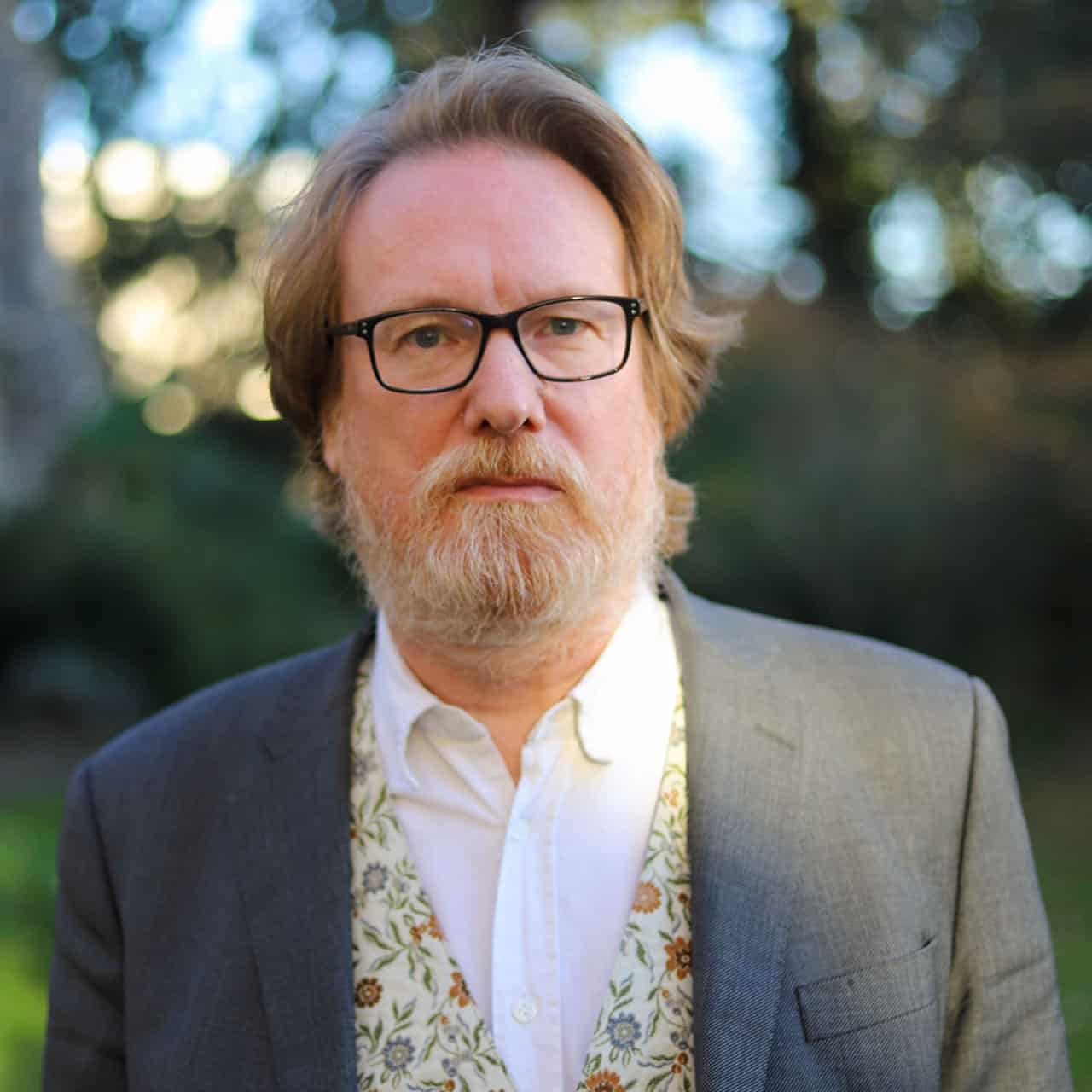
Alwyn Turner
Senior Lecturer in Cultural and Literary History
I’m a historian primarily interested in popular culture and politics in 19th- and 20th-century Britain.

Work Placements
Gain vital workplace experience with our local partners
You will have the option to take work placements with our partners including Arundel Castle, Butser Ancient Farm, Chichester Cathedral, Fishbourne Roman Palace, Pallant House Gallery, Royal Marines Museum, Tangmere Aviation Museum, Weald and Downland Open Air Museum (home of TV’s Repair Shop) and West Sussex Record Office.
Study Abroad
Explore the opportunity to study part of your course abroad
As a student at the University of Chichester, you can explore opportunities to study abroad during your studies to enrich your educational experiences.
It’s a chance to broaden your horizons, a great opportunity to meet new people, undertake further travelling and to immerse yourself within a new culture.
You will be fully supported throughout the process to help find the right destination and institution for you and your course. We can take you through everything that you will need to consider, from visas to financial support, to ensure you get the best out of your time studying abroad.
Careers
Open up your future career options
A degree in History provides you with the opportunity to take up a number of career roles after graduation. Our graduates are valued by employers as they possess key skills in communication, analysis and reporting.
The option to study issues of political, social and cultural significance, as well as work placement opportunities in archives, institutes and research centres, provides you with experience suitable for a range of career paths.
Many of our graduates continue on as teachers, lawyers, accountants, as well as management roles within a variety of settings.
Career paths include:
- Education
- Teaching
- Local and national government
- Journalism
- Public service
- Communications and PR
- Law.
Postgraduate pathways
- MA Cultural History
- MRes The History of Africa and the African Diaspora
- PGCEs
- MA Creative Writing
- Postgraduate research (MPhil/PhD).
University of Chichester alumni who have completed a full undergraduate degree at the University will receive a 15% discount on their postgraduate fees.
Course Costs
Course Fees 2027/28
UK fee
£10,050
International fee
£17,354
EU/EEA Fee Reduction Scholarship
EU/EEA students automatically pay the equivalent of UK fees via the EU/EEA Fee Reduction Scholarship
For further details about fees, please see our Tuition Fees page.
For further details about international scholarships, please see our Scholarships page.
To find out about any additional costs on this course, please see our Additional Costs page.
Entry Requirements
Typical Offer (individual offers may vary)
UCAS
104
tariff points from A levels or combination with Extended Project / BTEC / Cambridge Technical.
A Levels
BCC
BTEC/Cambridge Technical
DMM
Access to HE Diploma
Pass
IB
28 points
IELTS
6.0 overall
with no element lower than 5.5.
Contextual offers
We believe everyone deserves an equal opportunity to pursue higher education, regardless of their background.
When we receive your application we consider your personal circumstances and the factors surrounding your achievements to see if you are eligible for a contextual offer. This is an offer with a reduced entry tariff – typically the equivalent of 16 fewer UCAS points (two A-level grades).
Applicants who are predicted to achieve two or more (A-level) grades better than the published typical offer will normally be made the typical offer, rather than a reduced offer. For example, where the predicted grades are BBB, and the published typical offer is BCC, a BCC offer would be made.
Find out more about our contextual offers.
Integrated Foundation Year Option
Build your academic knowledge, skills and confidence before your studies begin
If you are interested in studying History, but would benefit from a better foundation of knowledge in the subject, or if you don’t think you will achieve the current entry requirements for the course, why not consider an integrated foundation year route.
This four-year course aims to build your academic skills and knowledge with an introductory first year, allowing you to confidently embark on an full undergraduate degree. After successfully passing the foundation year, you will move onto the standard degree course programme with the academic tools needed to succeed.
Find out more about our BA (Hons) History with Integrated Foundation Year degree course