
Children, Teaching and Practice in Physical Education Research Group
- ChiPrints Repository
- Inaugural Lectures
- PhD and MPhil Degrees
- Business Research Degrees
- Childhood, Social Work and Social Policy Research Degrees
- Dance Research Degrees
- Education Research Degrees
- English and Creative Writing Research Degrees
- Law Research Degrees
- Pre-PhD Preparation
- Psychology and Criminology Research Degrees
- Sport Research Degrees
- Theatre Research Degrees
- Research Centres
- Centre for Cultural History
- Centre for Education, Innovation and Equity
- Centre for Future Technologies
- Centre for Health and Allied Sport and Exercise Science Research (CHASER)
- Centre for Sustainable Business
- Centre for Workforce Development
- Centre of Excellence for Childhood, Society and Inclusion
- Chichester Centre for Critical and Creative Writing
- Chichester Centre for Fairy Tales, Fantasy and Speculative Fiction
- Creative Industries Research Centre
- MOVER Centre
- People and Well-Being in the Everyday Research Centre (POWER)
- Child and Adolescent Socio-Emotional Development Lab
- Cognitive Ageing and Dementia Research Lab
- Creative Research Methods Lab
- Cultural and Social Cognition Laboratory
- Employee Well-being in Work & Organisational Psychology (EWWOP) Lab
- Functional Behavioural Science Laboratory
- Human Attention Laboratory
- Lab for Global Research on Gender, Sexuality and Identity
- Mental Health and Wellbeing Lab
- Quantitative Criminology Lab
- Research in Practice Hub
- Sexualised Violence and Abuse Research Lab
- Vocal Communication Lab
- Qualitative Research Hub
- Social Work Collaborative Research Hub
- The Iris Murdoch Research Centre
- Research Excellence Framework
- Research Governance
- Research Office
Reasearch into Physical Education Practice
Children, teachers and practice in PE, sport and physical activity
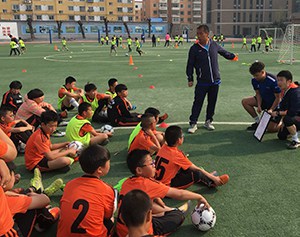
Researchers in this theme explore the experiences of children/young people and the attitudes and behaviours of teachers and coaches working with them in sport and physical education contexts. Consideration is given to the gendered nature of participation, safeguarding and developing confidence and competence to access opportunities. Specific attention is afforded to creative methodologies that serve best to understand children/young people’s subjective experiences. Teacher and coach epistemologies and behaviours form a focus of work that aims to understand practice and the impact that this has in professional environments.
Further work seeks to create methodologies able to capture teacher behaviours; aimed at enhancing the quality of feedback, used in teacher training, development and inspections.
Recent projects have been funded by the FA and NSPCC’s Child Protection in Sport Unit.
For enquiries concerned with themes of Children, Teachers and Practice in Sport and PE please contact Dr Suzanne Everley on s.everley@chi.ac.uk or Dr Julia Potter on j.potter@chi.ac.uk .
Children’s Experiences of Health and Wellbeing
Promoting health and wellbeing through sport and physical education
Sport and physical activity has long been considered to be a powerful factor in promoting childhood health and well-being. Our researchers are interested in how and when physical activity, sport and physical education experiences can promote such well-being changes and how we can better promote health and well-being through physical activity.
Two key strands can be seen in our research activity. First, we examine the factors that influence a child’s experience of physical activity (whether through formal coaching, teaching or play). In particular we examine how sociocultural factors (class, power dynamics, culture) shape the experience and impact of being physical active. In this line of research, we are particularly keen on exploring research methods (e.g., drawing, photography) that allow us to more fully access the child’s voice and subjective experiences. Second, our research examines the potential short and long-term health benefits of physical activity in children. In this strand, we have explored the efficacy of schemes such as the daily mile on physical activity participation, attitudes to physical activity and physical fitness. We have also evaluated exercise schemes designed to promote activity within obese populations.
Are you interested in finding out more about this research area or getting involved in our research projects? Please email Suzanne Everley on s.everley@chi.ac.uk.
- Everley, S. (In press) ‘Physical Literacy and the development of Girls’ Leadership: An Evaluation of the FA’s Active Literacy Through Storytelling Programme’ Education 3-13.
- Everley, S. (2019 ) ‘Using visual research tools when working tools with children in a primary school setting’, Chapter 5, pp55-70, in Researching Difference in Sport and Physical Activity, Medcalfe, R. and Mackintosh, C. (Eds) Routledge.
- Everley, S. (2020) The Child Protection in Sport Unit – Supporting National Governing Bodies in Hearing the Voices of Children: An Evaluation of Current Practice. Child Abuse Review, 29 (2). 114-129. ISSN 0952-9136
- Everley, S. (2019) ‘Understanding Gendered Physical Activity of Children: Challenging binaried representation in school based research’ Education 3-13, 48:2, 226-238. https://doi.org/10.1080/03004279.2019.1605399
- Everley, S. and Everley, K. (2018) Primary School Children’s Experiences of Physical Activity: The place of social and cultural capital in participation and implications for schools’ Early Childhood Development and Care 189:2, 2032-2042 https://doi.org/10.1080/03004430.2018.1431231
- Everley, S and Macfadyen, T (2015) ‘I like playing on my trampoline; it makes me feel alive’ : Valuing Physical Activity: Perceptions and Meanings for Children and Implications for Primary Schools’ Education 3-13, 45:2. 1-25. DOI10.1080/03004279.2015.1069367
- Sims, J., Scarborough, P. and Foster, C. (2015) ‘The effectiveness of interventions on sustained childhood physical activity: a systematic review and meta-analysis of controlled studies’ PLoS ONE e0132935 doi.org/10.1371/journal.pone.0132935
Publications in Conference Proceedings:
- Everley, S. and Potter, J. (2016) ‘’Do ‘Sporting’ Agendas Limit Primary School Aged Girls’ Physical Activity?’ Special Issue: Abstracts of the 13th International Congress on Obesity, 17:2 1-248
- Everley, S. and Potter, J. (2016) ‘Primary School Aged Boys And Physical Activity In School Environments: Subjective Experiences And The Place Of ‘Sport’ In Social Identity’, Special Issue: Abstracts of the 13th International Congress on Obesity, 17:2. 1-248
- Potter, J and Everley, S (2015) ‘Participation in Physical Activity and PE In UK Primary Schools’ in Obesity Facts, The European Journal of Obesity 8:1 1-272
Conference presentations
- Everley, S.C and Everley, K (2017) ‘Children’s experiences of physical activity: implications for primary schools’, Presented to the British Educational Research Association’s Annual Conference, University of Sussex, Nominated for an Award for Best Paper within the PE and Sport Pedagogy SIG.
- Gault, M.L., Potter, J., Lauder M. (2018). Effects of the daily mile on measure of physical fitness in 9-10 year olds.European College of Sport and Exercise Sciences Annual Conference. Dublin, Ireland.
- Lauder, M., Potter, J., Gault, M.L. (2018). The intra-reliability of a physical fitness test battery in 9-10 year olds. European College of Sport and Exercise Sciences Annual Conference. Dublin, Ireland.
- Potter, Gault, M.L., Lauder M. (2018). The impact of running a mile-a-day in school on attitudes to physical activity. European Congress on Obesity.
Our Researchers
Dr Suzanne Everley
Reader in the Sociology of Physical Education, Activity and Health, Senior Fellow of the Higher Education Academy, Deputy Director South Coast Doctoral Training Partnership, Chair of the Association of Child Protection Professionals’ Special Interest Group Safeguarding in Sport, Development Lead for the Women’s Sport Leadership Academy
Optimising Practice in PE
Enhancing the outcomes of physical education
Physical Education is a key curriculum subject with a broad role, including; teaching values of fairness and respect; experiencing competition; developing physical confidence and competence; providing opportunities for and learning around a healthy and active lifestyle. There is a growing body of evidence of an increase in sedentary lifestyles across populations and the resultant declines in mental and physical health. Yet there is a ‘squeeze’ on PE quantity and quality, with pressure on schools to maximise outcomes in core subjects and the increased use of external coaching companies; some with little training or experience. These factors mean there is a pressure to optimise the outcomes of Physical Education lessons. Our researchers are interested in identifying where the opportunities for improvements exist in sessions delivered by both teachers and coaches and to recognise successful strategies to optimise practice in physical education.
There are three strands in our research activity focussed on the delivery of high-quality Physical education. The first strand focuses on teacher behaviours; in particular we are interested in questioning and feedback strategies. Specific work being done in this area is to identify and validate tools that can be used to ‘measure’ the outcomes of teacher behaviours. We are also exploring other areas such as non-traditional approaches (such as; novel sports, differing environments; daily mile) by practitioners to improve pupil outcomes.
The second strand explores teacher and coach education; focussing on the use of reflection in the development of pedagogical understanding and practice. Research undertaken with trainee teachers completing a PGCE route has led to the development of reflective learning strategies that are effective when completing a higher education based initial teacher training course. The impact and effectiveness of such strategies can also be applied to the professional development of qualified teachers.
The third strand currently being developed by staff is to consider issues around inclusion; principally the issues for transgender students in a sport and PE setting within schools, alongside SEND considerations.
- Jacobson, M.E., Potter, J. A., & Laws, C.J. (2012). Extracurricular Physical activity provision in Healthy Schools; A qualitative study of teachers’ perceptions and experiences. Physical Education Matters,73(3), p51.
- Mackinney, R. (2020). Value of video-recorded sessions with simultaneous audio feedback to pre-service teachers. Physical Education Matters, 15 (2), 72-74.
- Mackinney, R., Pulling, C., & Kelly J. (2020). The Effect of Feedback Type on Academic Performance” to Practice and Evidence of the Scholarship of Teaching and Learning in Higher Education. Submitted to: Practice and Evidence of the Scholarship of Teaching and Learning in Higher Education.
- Mackinney, R., Eldridge, D., Prior, M., & Pulling C. (2013). Thinking Games: Primary Key Stage 2 Invasion Games. Southampton, U.K: Thinking Sport.
- Mantle, M. (2010). An exploration of the maturation of PGCE student teacher’s ability to reflect, using a range of reflective strategies to identify possible stages of development. Research in Education, 5 (83), pp.26-35
- Mantle, M. (2010). An Investigation of student teachers’ ability to reflect. In Miller, A., Sharp, J. and Strong, J. (Eds.), What is research-led teaching? Multi-disciplinary perspectives. (pp. 145 – 150). H.E. funding council for England publication.
- Mantle, M. (2010). The Impact and effectiveness of reflective learning strategies on student teachers’ ability to reflect. Physical Education Matters, 5 (2), pp. 26 – 29.
- Mantle, M. (2016). Reflective Learning in Teacher preparation – the movement away from HE-based learning. Physical Education Matters, 11 (3), pp. 72 – 73.
- Mantle, M. (2018). How different reflective learning activities introduced into a postgraduate teacher training programme in England promote reflection and increase the capacity to learn. Research in Education. May 2018, pp.1 – 14.
- Mantle, M. (2019). The Benefits of Oral Reflection: The use of oral reflective action learning sets and discussion groups with post graduate student teachers. International Journal of Secondary Education, 7 (1), pp. 11 – 16.
- Pulling, C., Eldridge, D., & Warner, J. (2018). Teacher perceptions of sports performance analysis methods within physical education. Physical Education Matters, 13(2), 74-77.
- Pulling, C., Eldridge, D., & Dillon, C. (2015). Practitioner behaviours during Key Stage 3 and Key Stage 4 invasion games lessons. Physical Education Matters, 10 (1), 39-44.
- Pulling, C. (2014). Sports performance analysis within physical education. Physical Education Matters, 9 (1), 68-70.
- Pulling, C. (2013). Using Video in Physical Education. Physical Education Matters, 8 (1), 30-31.
Conference Contributions
- Everley, S., C. and Potter, J., A. (2016, May 1-4) Do Sporting Agendas Limit Primary School Aged Girls Physical Activity? [Conference Presentation]. XIII International Congress on Obesity, Vancouver. Canada.
- Everley, S., C. and Potter, J., A. (2016, May 1-4) Primary School Aged Boys and Physical Activity n School Environments: Subjective Experiences and the place of Sport in Social Identity. [Conference Presentation]. XIII International Congress on Obesity, Vancouver. Canada.
- Potter, J. A., & Gault, M. (2017, September 5-7). The impact of the Daily Mile on attitudes to physical activity. [Conference
- Presentation]. BERA 2017 Conference, Brighton, Sussex, UK.
- Potter, J.A., & Everley, S.C. (2015). Perceptions and participation in physical activity in PE UK primary schools. Obesity Facts. European Journal of Obesity, 8 (1) p120
- Potter, J.A., & Morris, G. (2013, September 3-5). A Five-Year Intervention Administered by A Physical Education Department in An Inner-City Boys School. [Conference Presentation]. BERA 2013 Conference, Brighton, Sussex, UK.
- Jacobson, M., Potter, J.A., & Laws, C.J. (2012). Facilitators to engagement in Physical Education for obese and non-obese pupils in health promoting schools. Obesity Reviews, 5 (1), p240.
- Jacobson, M.E., Potter, J.A., & Laws C.J. (2012, July 4-5). Health-related exercise and physical activity promotion in Healthy Schools: Opportunities for cross-curricular working. [Conference Presentation]. AfPE 2012 National PE and School Sport Conference, Chipping Norton, Oxon, UK.
- Pulling, C., & Court, J. (2018, July 3-4). Using video and statistical feedback to reflect on pedagogical behaviours. [Conference Poster Presentation]. Association for Physical Education National Conference, St George’s Park, England.
- Pulling, C., Eldridge, D., & Warner, J. (2017, September 5). Teacher perceptions of sports performance analysis within physical education. [Conference Poster Presentation]. International Society of Performance Analysis of Sport Workshop, London Sport Institute, Middlesex University, London, England.
Our Researchers
Kirsty Harris
Programme Co-ordinator and Senior Lecturer in PE plus International Coordinator for PE
Dr Suzanne Everley
Reader in the Sociology of Physical Education, Activity and Health, Senior Fellow of the Higher Education Academy, Deputy Director South Coast Doctoral Training Partnership, Chair of the Association of Child Protection Professionals’ Special Interest Group Safeguarding in Sport, Development Lead for the Women’s Sport Leadership Academy